
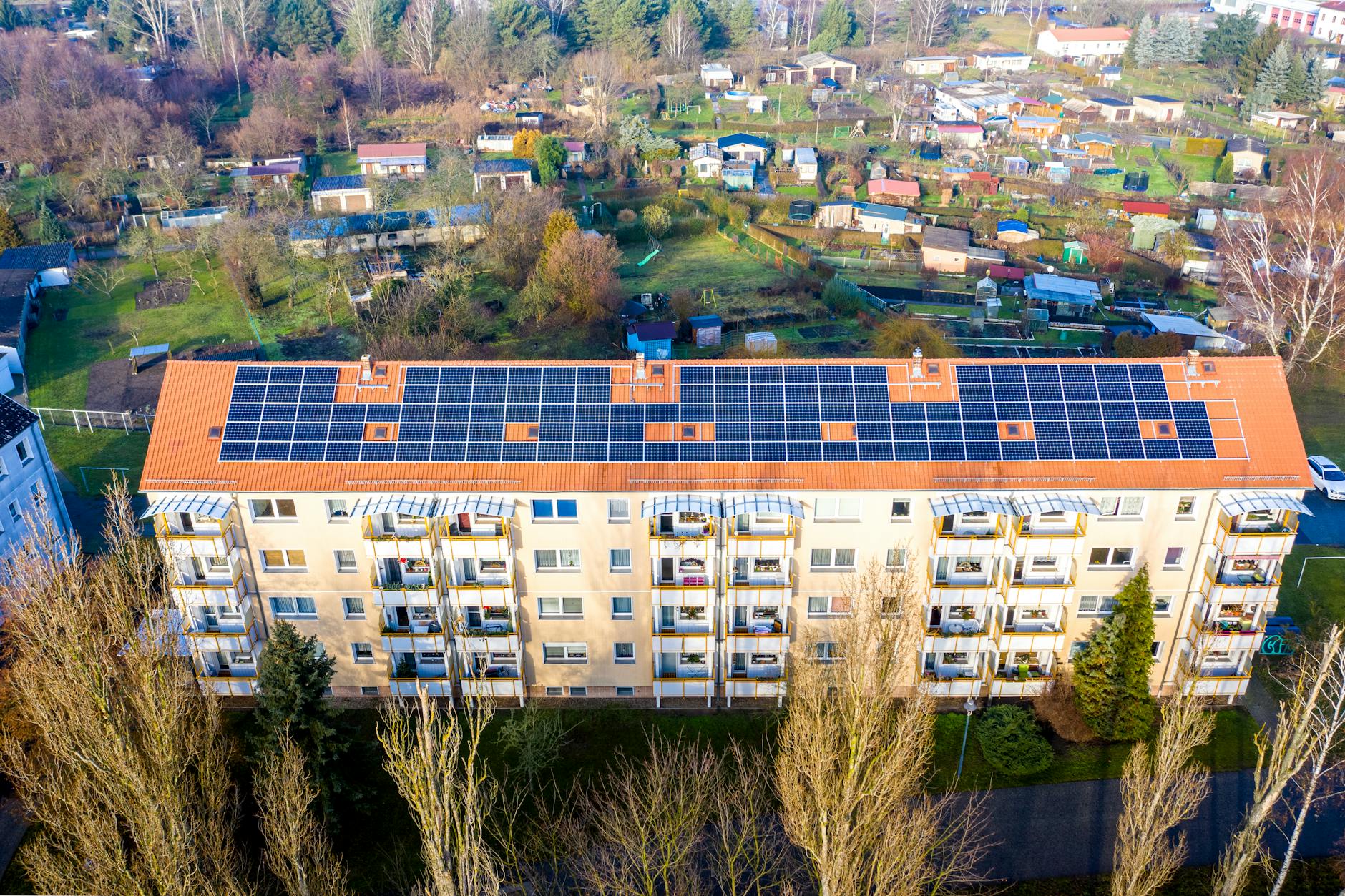
TL;DR: Metal roofs are one of the best surfaces for solar panel installation. Standing seam metal is the top choice because clamps attach directly to the raised seams with zero roof penetrations. Other metal roof types (corrugated, R-panel, ribbed) work well with bracket-style mounts. The combination of a metal roof lasting 40 to 70 years and solar panels lasting 25 to 30 years means homeowners skip the costly remove-and-reinstall cycle that asphalt shingle roofs require.
──────────────────────────────────────────────────
Short Answer: Metal Roofs Are Excellent for Solar
Yes, solar panels can go on a metal roof. And not just “can” but “should” is closer to the truth. Metal roofs rank among the most solar-friendly surfaces available, and many installers in the Hudson Valley prefer working with them over asphalt shingles.
The biggest reason? Lifespan match. A metal roof lasts 40 to 70 years. Solar panels produce power for 25 to 30 years. That means the roof will still be in solid shape when the panels reach end of life. Compare that to asphalt shingles, which last 20 to 25 years and may need replacement while the panels are still producing at full capacity.
Metal roofs also shed snow faster than asphalt, which matters during Hudson Valley winters when heavy snowfall can cut solar production for days or even weeks on other roof types.
Mounting Methods by Metal Roof Type
Not all metal roofs are the same, and the mounting hardware changes based on the roof profile. Here is how installation works for each type.
Standing Seam: The Best-Case Scenario
Standing seam metal roofs have raised vertical seams running from ridge to eave. Installers attach S-5 clamps or similar hardware directly onto these seams. No drilling. No holes. No roof penetrations at all.
This matters because every hole in a roof is a potential leak point. With standing seam clamps, the roof membrane stays completely intact. The clamps grip the seam mechanically and hold the racking rails that support the panels. Installation is faster too, since there is no need to locate rafters or apply sealant.
Corrugated Metal: Bracket Mounts Through the Ridges
Corrugated roofs have a wavy profile with alternating ridges and valleys. Mounting brackets bolt through the ridges (the high points) into the structural purlins underneath. Rubber gaskets and sealant waterproof each penetration point.
The process takes longer than standing seam clamps, but experienced installers complete corrugated metal installs with no issues. The key is fastening through the ridges, not the valleys, since valleys carry water runoff.
R-Panel and Ribbed Metal: Similar to Corrugated
R-panel (also called PBR panel) and ribbed metal roofs use trapezoidal ribs instead of rounded corrugation. Mounting follows the same approach as corrugated: brackets attach through the raised rib sections with compression gaskets and sealant below.
Some R-panel profiles are tall enough to accept mini standing seam clamps that grip the rib without drilling. An installer can evaluate whether clamp-style or bracket-style hardware fits the specific panel profile.
Stone-Coated Steel Tiles: The Exception
Stone-coated steel tiles mimic the look of clay or concrete tiles but use a steel substrate. These are the one metal roof type that does not work well for solar. The textured surface and overlapping tile pattern make it hard to create a weathertight seal around mounting hardware. Tiles can crack when drilled, and the uneven surface makes racking alignment difficult.
If the home has stone-coated steel tiles, a ground-mount system or a dedicated solar carport structure may be a better path forward.
Metal Roof Types: Compatibility at a Glance
Metal Roof Solar Compatibility by Type
| Metal Roof Type | Mounting Method | Roof Penetrations | Solar Compatibility | Notes |
| Standing Seam | S-5 or similar clamps | None | Excellent | Best metal roof type for solar; fastest install |
| Corrugated | Bracket mounts through ridges | Yes (sealed) | Good | Requires proper gaskets and sealant |
| R-Panel / PBR | Brackets or mini clamps | Varies by profile | Good | Some profiles accept clamp-style hardware |
| Ribbed Metal | Bracket mounts | Yes (sealed) | Good | Similar approach to corrugated |
| Stone-Coated Steel Tiles | Not recommended | Problematic | Poor | Tiles crack; uneven surface causes alignment issues |
Cost Comparison: Metal Roof vs Asphalt Shingle Solar Installation
Solar installation on a metal roof can cost the same as, or less than, installation on asphalt shingles. The difference depends on the metal roof profile.
Solar Mounting Cost Comparison: Metal Roof vs Asphalt Shingles
| Cost Factor | Standing Seam Metal | Corrugated/R-Panel Metal | Asphalt Shingles |
| Mounting hardware per panel | $30 to $60 | $40 to $80 | $40 to $70 |
| Labor time per panel | 15 to 25 minutes | 25 to 40 minutes | 25 to 40 minutes |
| Roof penetrations | Zero | 2 to 4 per mount point | 2 to 4 per mount point |
| Re-roofing during panel lifetime | Not needed | Not needed | Likely ($3,000 to $6,000 extra) |
| Total 25-year mounting cost premium | Lower than shingles | About the same | Baseline + re-roof labor |
Standing seam installations save money on labor because clamp systems install faster than lag bolt mounts. No pilot holes, no sealant application, no rafter-finding. Corrugated and R-panel installs run about the same as asphalt because the bracket method is similar in complexity to standard shingle mounting.
But the real cost savings show up over the system’s lifetime. An asphalt shingle roof installed today will likely need replacement in 20 to 25 years. If the solar panels still have 5 to 10 years of production left, removing the panels, replacing the roof, and reinstalling them adds $3,000 to $6,000 in labor alone. Metal roofs skip that expense entirely.
Five Advantages of Solar Panels on Metal Roofs
Beyond basic compatibility, metal roofs offer specific benefits that make solar systems perform better and last longer.
- Lifespan alignment: Metal roofs (40 to 70 years) outlast solar panels (25 to 30 years), so the roof will never need replacement during the panel’s lifetime. No re-roofing costs.
- Snow shedding: Metal surfaces are slippery. Snow slides off faster than on asphalt, reducing the number of winter days with zero production. For Hudson Valley homes that get 30+ inches of snow per season, this adds measurable kWh over a 25-year span.
- Heat reflection: Metal roofs reflect more solar radiation than dark asphalt shingles. Cooler roof surfaces mean cooler panels, and cooler panels produce more electricity. Solar panel output drops about 0.3% to 0.5% per degree Celsius above 25C (77F).
- No re-roofing disruption: Asphalt shingle roofs need replacement roughly once during a solar panel’s lifetime. That means panel removal, storage, roof tear-off, new shingles, and panel reinstallation. Metal roofs eliminate this entire cycle.
- Structural strength: Metal roofing panels distribute weight across continuous surfaces rather than individual shingles. The underlying structure (purlins or solid decking) is designed for metal’s specific load patterns, which handle the additional 2.5 to 4 pounds per square foot of solar panels well.
Weight Considerations for Metal Roof Solar Systems
A standard residential solar panel weighs 40 to 50 pounds and covers about 18 square feet. Mounting hardware adds another 5 to 10 pounds per panel. A 20-panel system puts roughly 900 to 1,200 pounds on the roof, spread across 350 to 400 square feet.
Metal roofs themselves are lighter than asphalt shingles. Standing seam steel weighs about 1 to 1.5 pounds per square foot, while asphalt shingles run 2 to 4 pounds per square foot. That means a metal roof has more remaining load capacity before reaching the structural limit of the framing.
Most homes built to modern New York building codes handle the combined weight of metal roofing plus solar panels without any modifications. Older homes (pre-1970) or homes with visible roof sagging should get a structural engineer evaluation ($300 to $500) before installation.
Galvanic Corrosion Prevention: Why Material Pairing Matters
When two different metals touch each other in the presence of moisture, galvanic corrosion can eat away at the less noble metal. This is a real concern when mounting aluminum solar panel frames and racking onto a steel roof.Prevention is straightforward:
- Use aluminum clamps on aluminum standing seam roofs: Same-metal contact eliminates the galvanic reaction entirely.
- Use stainless steel hardware on steel roofs: Stainless and galvanized steel are close enough on the galvanic scale to avoid significant corrosion.
- Install isolation barriers: Rubber, neoprene, or EPDM gaskets between aluminum racking and steel roofing create a physical barrier that blocks the electrochemical reaction.
- Avoid copper-to-aluminum contact: Copper grounding straps touching aluminum frames accelerate corrosion. Use tin-plated copper lugs or bi-metallic connectors at grounding points.
Any qualified installer in the Hudson Valley will select hardware that matches or isolates from the roof metal. Ask the installer to confirm what corrosion prevention measures they use. If the answer is vague, that is a red flag.
Warranty Implications for Metal Roof Solar Installation
Homeowners worry about voiding the metal roof warranty by adding solar panels. Here is how it breaks down:
- Standing seam clamp systems: Because these do not penetrate the roof surface, most metal roof manufacturers allow them without affecting the warranty. Some manufacturers (such as McElroy Metal and Fabral) explicitly approve specific clamp brands.
- Bracket/bolt-through systems: Penetrations on corrugated or R-panel roofs may void the weathertight warranty on affected areas. The solar installer should provide their own waterproofing warranty covering the penetration points.
- Painted or coated finishes: Clamp hardware that slides or shifts can scratch Kynar or SMP paint coatings. Properly torqued clamps with protective pads prevent this.
Best practice: contact the metal roof manufacturer before installation, provide the clamp or bracket model number, and get written confirmation that the warranty remains intact. Keep this document with the solar contract.
──────────────────────────────────────────────────
Frequently Asked Questions
Q: Can you put solar panels on a metal roof without drilling holes?
A: Yes, but only on standing seam metal roofs. Clamp systems grip the raised seams mechanically without any drilling or roof penetrations. Corrugated, R-panel, and ribbed metal roofs require bracket mounts that bolt through the roof surface with sealed gaskets.
Q: Do solar panels damage a metal roof?
A: When installed correctly, solar panels do not damage a metal roof. Standing seam clamps leave the roof surface completely intact. Bracket systems on corrugated or R-panel roofs create small penetrations that are sealed with rubber gaskets and sealant. The main risk is galvanic corrosion from mismatched metals, which proper hardware selection prevents.
Q: Is solar installation more expensive on a metal roof than on asphalt shingles?
A: Standing seam metal roof installations are less expensive than asphalt shingle installs because clamp hardware is faster to mount and requires no sealant or rafter-finding. Corrugated and R-panel installs cost about the same as shingle installs. Over 25 years, metal roofs save money because there is no need to remove panels for a roof replacement.
Q: Will adding solar panels void my metal roof warranty?
A: Standing seam clamp systems do not penetrate the roof, so most metal roof manufacturers allow them without affecting the warranty. Bracket systems on corrugated or R-panel roofs may affect the weathertight warranty on penetration areas. Contact the roof manufacturer with the specific mounting hardware model number to get written warranty confirmation before installation.
Q: What type of metal roof is best for solar panels?
A: Standing seam metal is the best type for solar panels. Clamps attach to the raised seams with no drilling, no holes, and no sealant. Installation is faster and cheaper, the roof membrane stays intact, and most manufacturers approve clamp-style mounting without warranty impact. Stone-coated steel tiles are the worst choice due to cracking and alignment problems.
Q: How do you prevent corrosion where solar mounts contact a metal roof?
A: Use matching metals (aluminum clamps on aluminum roofs) or stainless steel hardware on galvanized steel roofs. Place rubber, neoprene, or EPDM gaskets between aluminum racking and steel roofing to block galvanic reaction. Avoid direct copper-to-aluminum contact at grounding points by using tin-plated copper lugs or bi-metallic connectors.
Last updated: March 2026