
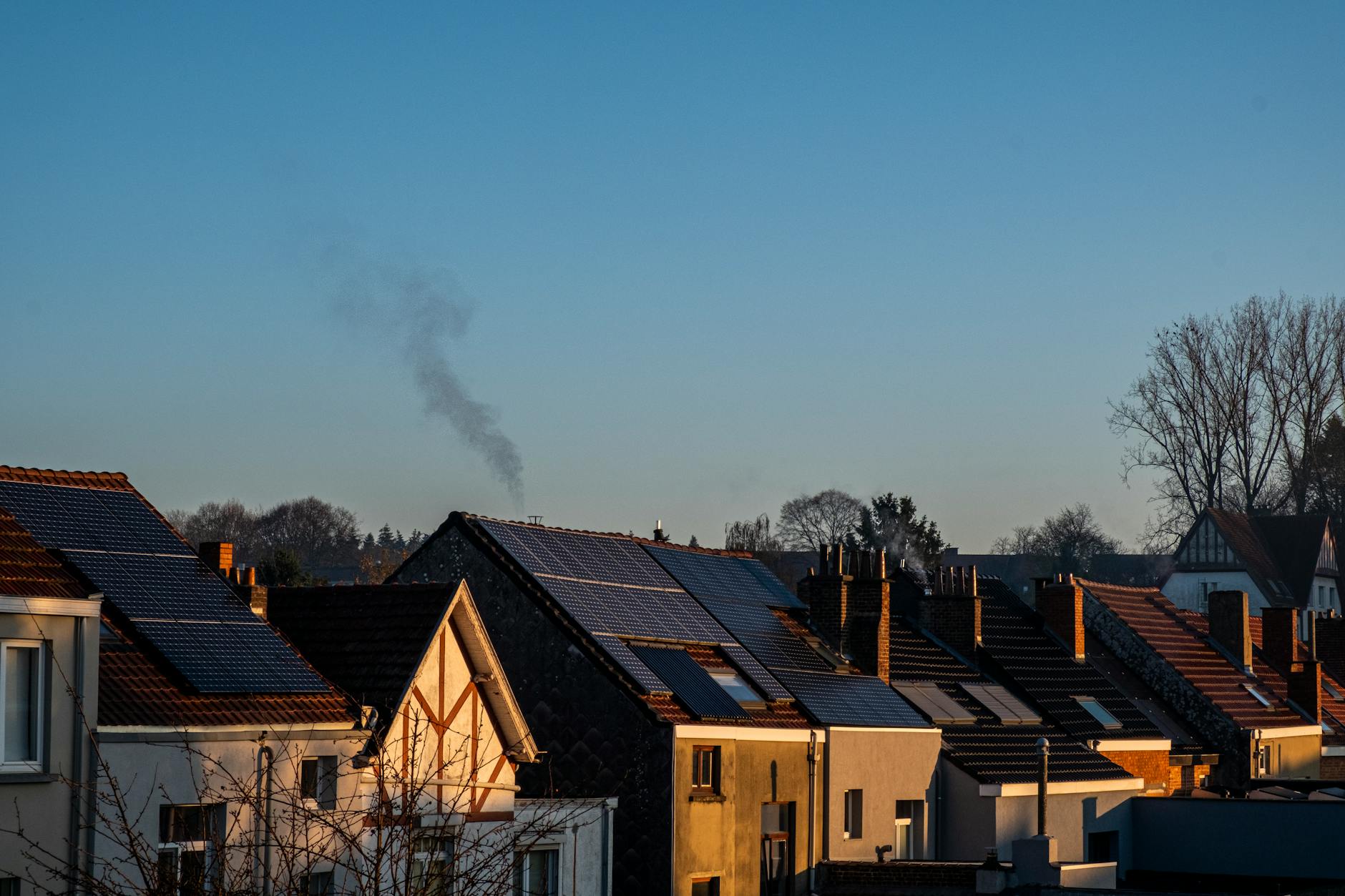
TL;DR: Roof mount solar is cheaper upfront and works well for properties with newer roofs and limited land. Ground mounted solar panels cost 10-20% more but produce 10-25% more energy per panel thanks to optimal tilt angles, easier maintenance access, and better airflow. For Hudson Valley properties with at least a quarter acre of open land, ground mounts are the stronger long-term investment.
──────────────────────────────────────────────────
Cost Breakdown: Ground Mount vs Roof Mount Solar in New York
Ground mounted solar panels cost more than roof mount systems. That price gap runs 10-20% on average, and the reasons are straightforward: ground mounts need a dedicated racking structure, concrete footings or ground screws, trenching for electrical conduit, and more labor hours on site.
For a residential 10 kW system in the Hudson Valley (as of early 2026), here is what the numbers look like:
Ground Mount vs Roof Mount Solar: Cost Comparison (10 kW Residential, Hudson Valley 2026)
| Cost Component | Roof Mount | Ground Mount | Difference |
| Panels + Inverter | $10,000-$12,000 | $10,000-$12,000 | $0 (same equipment) |
| Racking/Mounting | $2,000-$3,000 | $4,000-$6,000 | +$2,000-$3,000 |
| Foundation/Footings | N/A (uses roof) | $1,500-$3,500 | +$1,500-$3,500 |
| Trenching + Conduit | N/A | $1,500-$3,000 | +$1,500-$3,000 |
| Labor | $3,000-$4,500 | $4,000-$6,000 | +$1,000-$1,500 |
| Total Installed | $22,000-$28,000 | $26,000-$34,000 | +$4,000-$6,000 |
| Cost per Watt | $2.20-$2.80 | $2.60-$3.40 | +$0.40-$0.60 |
| After 30% ITC | $15,400-$19,600 | $18,200-$23,800 | +$2,800-$4,200 |
The racking alone accounts for most of the difference. Roof mounts bolt onto existing rafters or trusses. Ground mounts need their own foundation, whether that is poured concrete piers, helical ground screws, or driven steel posts. Trenching adds $1,500 to $3,000 depending on the distance from the array to the electrical panel.
But cost per watt does not tell the full story. Ground mount systems produce more kilowatt-hours per installed watt because they sit at the ideal tilt angle with zero shading compromises. Over a 25-year system life, that extra output can offset the higher upfront cost entirely.
Space Requirements and Property Size
A 10 kW ground mount solar array needs roughly 600 to 800 square feet of open ground. That sounds manageable until you factor in setbacks, shading buffers, and access paths for maintenance.
In practice, most ground mount installations in the Hudson Valley require a minimum of a quarter acre (about 10,890 sq ft) of usable, unshaded land. “Usable” is the key word. Sloped terrain, tree lines, septic fields, and well radius exclusion zones all eat into available space.
Roof mount systems skip the land question entirely. The panels sit on an existing structure, and for homes with 500+ square feet of south-facing roof area, a 10 kW system fits without much difficulty. East-west split configurations work on homes without ideal south exposure, though they produce 10-15% less energy annually.
For rural properties in Dutchess, Ulster, and Orange counties (where lots of 1+ acres are common), space for ground mounts is rarely the limiting factor. In denser areas like Beacon, Newburgh, or Kingston, roof mounts make more sense simply because there is not enough open ground.
Optimal Tilt Angle: Why Ground Mounts Produce More Power
Ground mounted solar panels can be set to the exact tilt angle that maximizes energy production for a given latitude. In the Hudson Valley (41-42 degrees north), that optimal fixed tilt is 25 to 30 degrees facing true south.
Roof mounts are stuck with whatever angle the roof provides. A typical residential roof pitch in New York is 6/12 (about 26.5 degrees), which happens to be close to ideal. But plenty of homes have 4/12 pitches (18 degrees), 8/12 pitches (33 degrees), or roof planes that face southeast, southwest, or even east-west. Each deviation from the ideal costs energy output.
The production difference between a perfectly oriented ground mount and an average roof mount runs 10-25% annually. On a 10 kW system producing around 12,000 kWh per year at optimal angle, that gap equals 1,200 to 3,000 kWh, or $180 to $540 in annual electricity savings at current Central Hudson rates ($0.15/kWh average).
Some ground mount systems go a step further with single-axis trackers that follow the sun from east to west throughout the day. Trackers boost output another 15-25% over fixed ground mounts, but they add $3,000 to $5,000 to the system cost and introduce moving parts that need maintenance.
Roof Condition: The Hidden Cost Factor
Roof mount solar panels are designed to last 25 to 30 years. If the roof underneath them needs replacement in 10 years, that creates an expensive problem. Removing a solar array to reroof and reinstalling it costs $3,000 to $10,000 depending on system size and roof complexity.Before any roof mount installation, a qualified roofer should inspect the structure. Key checkpoints:
- Roof age (asphalt shingles last 20-30 years; if the roof is already 15+ years old, replace it first)
- Structural integrity of rafters and decking
- Existing leaks, soft spots, or sagging
- Remaining warranty on roofing materials
Ground mounts sidestep this issue completely. The panels sit on their own independent structure with zero interaction with the building envelope. Roof repairs, replacements, and maintenance happen on their own schedule without touching the solar system.For homeowners with roofs older than 12-15 years, the math changes significantly. Adding $15,000 to $25,000 for a new roof before installing solar can push the total project cost close to (or past) what a ground mount system would cost. And the ground mount avoids the problem of needing to reroof under panels a decade from now.
Setback and Zoning Requirements in New York’s Hudson Valley
New York State does not have a single statewide setback rule for ground mount solar. Instead, each municipality sets its own zoning requirements. In the Hudson Valley, residential ground mount solar setbacks range from 10 to 50 feet from property lines depending on the town.Common zoning requirements across Dutchess, Ulster, and Orange counties:
- Front yard setback: 50-75 feet from the road right-of-way (most restrictive)
- Side yard setback: 10-25 feet from the property line
- Rear yard setback: 15-30 feet from the property line
- Height limit: 12-15 feet maximum for ground mount structures
- Lot coverage: ground mount arrays count toward impervious surface limits in some towns
Roof mount systems face fewer zoning hurdles. Most Hudson Valley towns treat rooftop solar as a permitted accessory use in all residential zones. The main restriction is that panels cannot extend more than 12 inches above the roof peak (fire code requirement for firefighter access).Before committing to a ground mount, check with the local building department. Towns like New Paltz, Rhinebeck, and Woodstock have design review boards that add 4 to 8 weeks to the permitting timeline for visible ground mount arrays. Some historic districts restrict ground mounts entirely in front yards.
Maintenance, Snow Removal, and Long-Term Access
Ground mount solar systems are easier to maintain than roof mounts. That is not an opinion; it is a function of physics. Panels at ground level (or slightly above) can be cleaned, inspected, and repaired without ladders, safety gear, or roof access equipment.
Snow removal highlights the difference most clearly. After a Hudson Valley winter storm drops 8 to 12 inches, ground mount panels can be brushed off with a soft-bristle roof rake from the ground. Roof mount panels? Getting on a snow-covered roof to clear panels is dangerous and something most homeowners should not attempt. The alternative is waiting for the snow to melt, which means lost production during the shortest, lowest-output days of the year.
Panels tilted at 30+ degrees shed snow faster than lower-angle installations. Ground mounts set to 30 degrees clear themselves after most light snowfalls. Roof mounts on a 4/12 pitch (18 degrees) hold snow longer and produce less winter energy as a result.
Maintenance and Snow Handling: Ground Mount vs Roof Mount
| Factor | Roof Mount | Ground Mount |
| Panel Cleaning | Requires ladder or professional service | Reachable from ground level |
| Snow Removal | Dangerous; most homeowners wait for melt | Brush off with soft rake from ground |
| Snow Shed Angle | Depends on roof pitch (18-33 degrees typical) | Set to optimal 30 degrees |
| Inverter Access | Attic or roof level | Ground level, easy troubleshooting |
| Annual Inspection | $150-$300 (roof access needed) | $75-$150 (ground level) |
| Panel Replacement | Roof work required | Simple swap at ground height |
Inverter and wiring access is another practical advantage. Ground mount systems keep electrical components at accessible height, making troubleshooting faster and cheaper. Roof mount inverter connections sit in the attic or on the roof itself, where a technician visit costs more and takes longer.
Aesthetic Impact and Property Value
Solar panels on a roof blend into the roofline, especially with modern all-black panels and black mounting hardware. Most neighbors and passersby barely notice them. Ground mount arrays are more visible, sitting in the yard where anyone driving by can see the structure.
For some homeowners, that visibility is a dealbreaker. Others view it as a non-issue, particularly on larger rural lots where the array sits behind the house or alongside an outbuilding.
Property value impact is positive for both configurations. A 2024 Zillow study found that homes with solar sell for 4.1% more on average. The study did not differentiate between ground and roof mount, but real estate agents in the Hudson Valley report that both types appeal to buyers, especially as electricity costs continue climbing.
One aesthetic option for ground mounts: a solar carport or pergola structure that doubles as covered parking or a shaded patio. These cost more than standard ground racks but add functional outdoor space alongside the energy production.
When Each Option Makes the Most Sense
The right choice depends on the property, the roof, and the budget. Here is a quick decision framework:Choose roof mount solar when:
- The roof is under 10 years old with 20+ years of life remaining
- South-facing roof area is 500+ square feet with minimal shading
- Available land is limited or needed for other uses
- Budget is tighter (roof mounts cost 10-20% less)
- Local zoning makes ground mount permitting difficult
Choose ground mount solar when:
- The roof is older than 12-15 years or has structural concerns
- Roof orientation is poor (north-facing, heavy shade, low pitch)
- The property has a quarter acre or more of open, unshaded land
- Maximum energy production per panel is the priority
- Easy maintenance access and snow clearing matter (especially in the Hudson Valley)
Both systems qualify for the same federal and state incentives: the 30% federal Investment Tax Credit, NY-Sun incentives through NYSERDA, and net metering credits with Central Hudson or NYSEG. The incentive amount is based on system cost, so the higher-cost ground mount actually generates a larger tax credit in absolute dollars.
──────────────────────────────────────────────────
Frequently Asked Questions
Q: Is ground mount solar worth the extra cost?
A: For properties with adequate land, yes. Ground mount systems produce 10-25% more energy per panel due to optimal tilt angles and better airflow. Over 25 years, that extra production can offset the 10-20% higher upfront cost. The easier maintenance access and independence from roof condition also reduce long-term expenses.
Q: How much land do you need for a ground mount solar system?
A: A 10 kW residential ground mount array needs 600-800 square feet of panel area, but after setbacks, access paths, and shading buffers, plan on having at least a quarter acre of open, unshaded land. Larger systems (20-30 kW) need proportionally more space.
Q: Do ground mount solar panels need a concrete foundation?
A: Not always. Three foundation types are common: poured concrete piers, helical ground screws, and driven steel posts. Ground screws and driven posts are faster to install and work well in most Hudson Valley soil conditions. Concrete piers are used on rocky sites or where soil load-bearing capacity is low.
Q: Can I install ground mount solar in my front yard in the Hudson Valley?
A: It depends on local zoning. Most Hudson Valley towns require ground mount arrays to meet front yard setbacks of 50-75 feet from the road. Some municipalities, particularly those with historic district overlays, restrict or prohibit ground mount solar in front yards entirely. Check with the local building department before planning the layout.
Q: Do roof mount solar panels damage the roof?
A: Properly installed roof mount systems do not damage roofs. Mounting hardware is bolted through the roof deck into rafters, and each penetration point is sealed with flashing and waterproof boots. The risk comes from poor installation or from adding panels to a roof that is already near the end of its service life. A roof inspection before installation prevents most problems.
Q: Which solar mounting option is better for snow in New York?
A: Ground mounts handle snow better for two reasons. First, they can be set to a steeper 30-degree tilt that sheds snow faster. Second, homeowners can safely clear snow from ground-level panels after storms. Roof mount panels on lower-pitch roofs hold snow longer, and clearing them requires getting on a snow-covered roof, which is not safe for most people.
Last updated: March 2026