
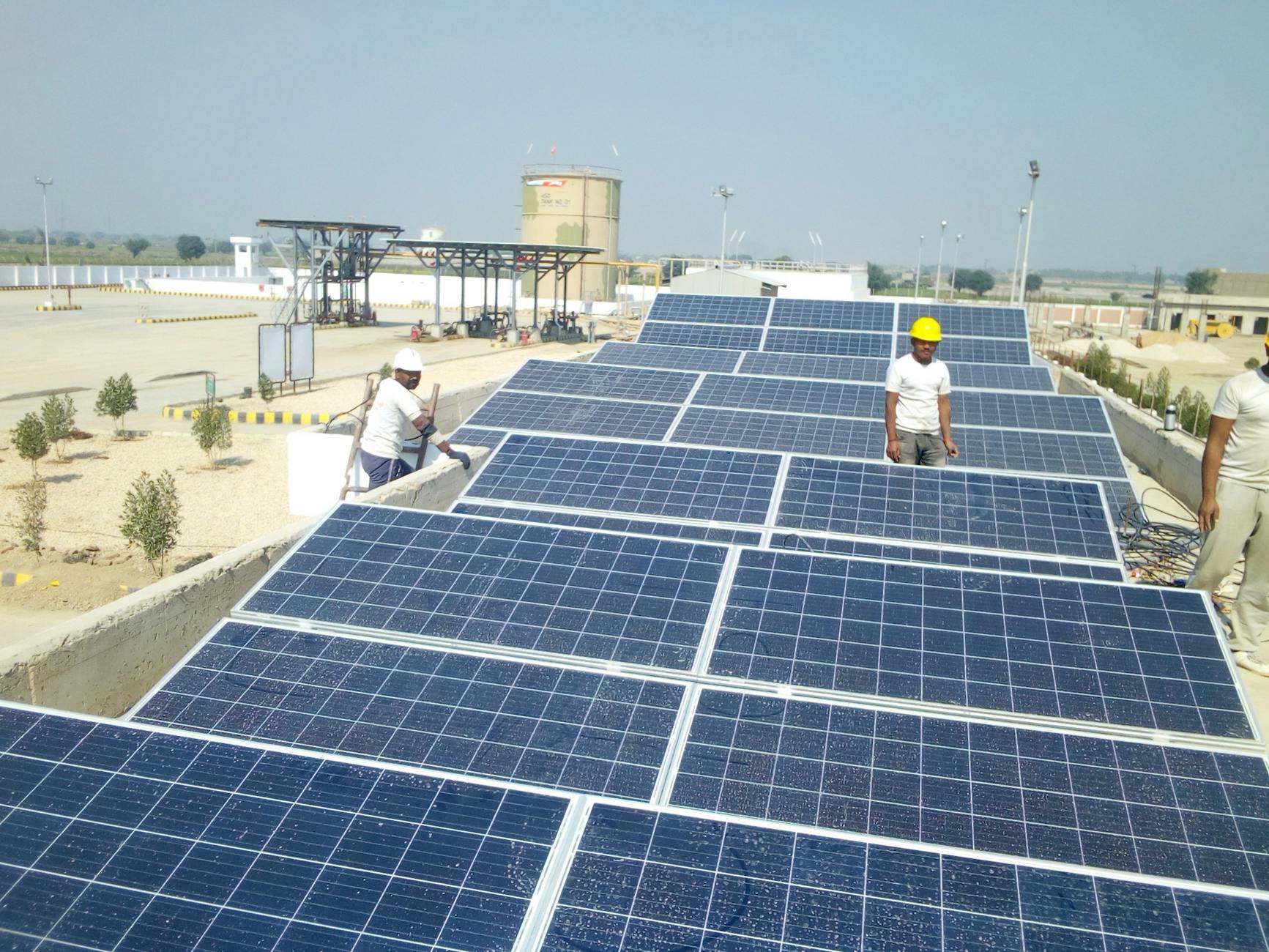
TL;DR: A residential solar system in New York costs $2.80 to $3.40 per watt before incentives in 2026. A typical 8 kW system runs $22,400 to $27,200 before credits. After stacking the 30% federal ITC, NYSERDA NY-Sun rebate, and the NY state tax credit (up to $5,000), net out-of-pocket drops to roughly $11,000 to $16,000. Most Hudson Valley homeowners see full payback in 6 to 8 years.
──────────────────────────────────────────────────
Average Solar Panel Installation Cost in New York (2026)
Solar panel installation in New York costs between $2.80 and $3.40 per watt before any incentives as of early 2026. That per-watt price covers the full turnkey installation: panels, inverter, racking, wiring, permits, labor, and overhead.
For Hudson Valley homeowners, the total price depends almost entirely on system size. Larger systems cost more in total dollars but less per watt, since fixed costs like permits and design get spread across more panels.
Here is what each common system size costs before and after incentives.
Solar Panel Installation Cost by System Size in New York (2026)
| System Size | Cost Before Incentives | Est. Federal ITC (30%) | Est. Net Cost After All Incentives | Annual Production |
| 6 kW | $16,800 – $20,400 | $5,040 – $6,120 | $8,500 – $12,000 | 7,200 – 7,800 kWh |
| 8 kW | $22,400 – $27,200 | $6,720 – $8,160 | $11,000 – $16,000 | 9,600 – 10,400 kWh |
| 10 kW | $28,000 – $34,000 | $8,400 – $10,200 | $13,500 – $20,000 | 12,000 – 13,000 kWh |
| 12 kW | $33,600 – $40,800 | $10,080 – $12,240 | $16,000 – $24,000 | 14,400 – 15,600 kWh |
These numbers reflect standard rooftop installations on asphalt shingle roofs with no major complications. Ground-mounted systems, battery add-ons, or complex roof layouts push costs higher (more on that below).
Where Does the Money Go? Full Cost Breakdown
A solar installation is not just panels bolted to a roof. Six cost categories make up the total project price, and knowing the split helps homeowners spot overpriced quotes.
Solar Installation Cost Breakdown by Category
| Cost Category | Share of Total | Typical Cost (8 kW System) | What It Covers |
| Solar Panels | 30% | $6,720 – $8,160 | Monocrystalline panels (400-430W each), 18-22 panels for 8 kW |
| Inverter | 15% | $3,360 – $4,080 | String inverter or microinverters, monitoring hardware |
| Racking & Mounting | 10% | $2,240 – $2,720 | Roof attachments, rails, clamps, flashing |
| Labor | 25% | $5,600 – $6,800 | Installation crew (2-3 days), electrical work, testing |
| Permits & Design | 10% | $2,240 – $2,720 | Engineering stamps, permit fees, site survey, system design |
| Overhead & Margin | 10% | $2,240 – $2,720 | Insurance, warranties, project management, company margin |
Panels and labor together account for more than half the total cost. The inverter is the second most expensive piece of hardware. String inverters cost less upfront, while microinverters (one per panel) cost more but offer panel-level monitoring and better shade tolerance.
Permit and design fees vary by municipality. Some Hudson Valley towns charge flat fees under $200, while others charge based on project value. A good installer handles the full permit process and rolls the cost into the contract.
New York Solar Incentives That Cut Your Cost
New York has one of the strongest solar incentive stacks in the country. Three programs can be combined to reduce the net cost by 40% to 55%.
Federal Investment Tax Credit (ITC): 30%
The federal ITC provides a dollar-for-dollar tax credit equal to 30% of the total installed cost. For an $24,000 system, that is a $7,200 credit applied directly against federal income tax liability. The ITC is available through at least 2032 under the Inflation Reduction Act. Homeowners must owe enough federal tax to claim the full credit, though unused amounts can roll forward to the next tax year.
NYSERDA NY-Sun Incentive
The NY-Sun program, administered by NYSERDA (New York State Energy Research and Development Authority), offers upfront rebates based on system size. For the Hudson Valley (ConEdison and Central Hudson territories), the residential rebate ranges from $0.20 to $0.40 per watt depending on the block and utility territory. On an 8 kW system, that translates to $1,600 to $3,200 off the installation cost. The rebate is applied at the point of sale, meaning the installer deducts it from the contract price before the homeowner pays. Block availability changes as funding is allocated, so the exact per-watt rate depends on when the application is submitted.
New York State Tax Credit: Up to $5,000
New York offers a state income tax credit equal to 25% of the installed cost, capped at $5,000. For any system costing $20,000 or more, homeowners hit the cap. This credit is claimed when filing New York State taxes and reduces state tax liability dollar for dollar. Unlike the federal ITC, the NY state credit cannot roll forward, so it must be used in the tax year the system is placed in service.
Net Cost After All Incentives
Stacking all three incentives on an 8 kW system at $3.00 per watt ($24,000 gross cost):
- Federal ITC (30%): -$7,200
- NYSERDA NY-Sun (est. $0.30/W): -$2,400
- NY State Tax Credit: -$5,000
- Net cost: $9,400
Real-world net costs range from roughly $11,000 to $16,000 for most Hudson Valley installations, depending on system size, exact NYSERDA block rates, and tax situation. Even at the high end, that is a significant reduction from the sticker price.
Factors That Affect Solar Installation Price
Not every home gets the average per-watt price. Several factors push costs up or down.
Roof Complexity
A simple south-facing roof with a 25-to-35-degree pitch and no obstructions is the cheapest to install on. Costs increase when the roof has multiple planes, dormers, skylights, or steep pitches above 40 degrees. Tile and metal roofs require specialized mounting hardware and take longer to install. Roof-related cost additions range from $500 to $2,500 depending on the situation.
Ground-Mount Premium
Ground-mounted systems cost 10% to 25% more than rooftop systems of the same size. The extra cost comes from concrete foundations or driven piers, trenching for underground conduit, and additional racking material. A ground-mount 8 kW system runs roughly $2,000 to $5,000 more than the same system on a roof. The tradeoff: ground-mounted arrays can be positioned at the optimal angle and orientation, and they are easier to maintain and expand later.
Battery Storage Add-On
Adding battery backup increases the total project cost by $10,000 to $18,000 for a standard whole-home battery (10 to 15 kWh capacity). Popular options in the Hudson Valley include the Tesla Powerwall 3 and the Enphase IQ Battery 5P. The battery qualifies for the 30% federal ITC when installed with solar, which brings the net battery cost down to $7,000 to $12,600. Battery storage is not required for grid-tied solar, but it provides backup power during outages and can help maximize self-consumption.
Financing Options: Cash, Loan, or Lease
How a homeowner pays for solar affects both the total cost and long-term savings.
Solar Financing Options Compared
| Option | Upfront Cost | Owns the System? | Claims Tax Credits? | Best For |
| Cash Purchase | Full system cost | Yes | Yes | Homeowners who want maximum long-term savings |
| Solar Loan | $0 down (most lenders) | Yes | Yes | Homeowners who want ownership without large upfront payment |
| Lease / PPA | $0 down | No (leasing company owns) | No (leasing company claims) | Homeowners with low tax liability or who prefer simplicity |
Cash purchases deliver the best total return because there are no interest payments eating into savings. Solar loans are the most popular option in New York, with terms typically ranging from 10 to 25 years and rates between 4% and 8% in 2026. Monthly loan payments are structured to be less than the electric bill savings from day one, so the system is cash-flow positive immediately.
Leasing and PPAs require no upfront cost, but the homeowner does not own the system and cannot claim the tax credits. The leasing company claims the incentives and passes some of the savings through as lower monthly payments. For homeowners who cannot use the tax credits (low tax liability), a lease or PPA can still make financial sense.
ROI and Payback Period for Hudson Valley Homeowners
Solar payback period in the Hudson Valley ranges from 6 to 8 years for cash purchases and financed systems where the homeowner claims all incentives. After payback, the system generates free electricity for the remaining 17 to 19 years of its 25-year warranty period.Here is how the math works for a typical 8 kW system:
- Gross cost: $24,000
- Net cost after incentives: ~$9,400 to $14,000
- Annual electricity savings: $1,600 to $2,200 (based on Central Hudson and NYSEG rates of $0.18 to $0.22/kWh)
- Payback period: 6 to 8 years
- 25-year savings: $35,000 to $55,000
These estimates assume net metering at full retail rate, which is currently available in New York for residential solar systems under 25 kW. Net metering allows homeowners to send excess solar production to the grid and receive a credit on their electric bill at the full retail electricity rate.Property value increases, too. Studies from the Lawrence Berkeley National Laboratory show that solar panels add roughly $15,000 to $20,000 to the resale value of a home with a 6 to 10 kW system. And in New York, the added value from a solar installation is exempt from property tax increases under Real Property Tax Law Section 487.
──────────────────────────────────────────────────
Frequently Asked Questions
Q: How much does it cost to install solar panels on a house in New York?
A: A residential solar installation in New York costs $2.80 to $3.40 per watt before incentives in 2026. For a standard 8 kW system, that is $22,400 to $27,200 before credits. After the 30% federal ITC, NYSERDA NY-Sun rebate, and NY state tax credit, the net cost drops to roughly $11,000 to $16,000.
Q: What incentives are available for solar in New York in 2026?
A: Three main incentives stack together: the 30% federal Investment Tax Credit (ITC), the NYSERDA NY-Sun upfront rebate ($0.20 to $0.40 per watt), and the New York State tax credit (25% of cost, capped at $5,000). Combined, these can reduce the total cost by 40% to 55%.
Q: How long does it take for solar panels to pay for themselves in the Hudson Valley?
A: Most Hudson Valley homeowners see full payback in 6 to 8 years when they claim all available incentives. After payback, the system produces free electricity for the remaining 17 to 19 years of its warranty. Total 25-year savings range from $35,000 to $55,000.
Q: Is it cheaper to buy or lease solar panels in New York?
A: Buying (cash or loan) produces higher total savings because the homeowner claims all tax credits and owns the system outright. Leasing requires no upfront cost, but the leasing company keeps the tax credits and the homeowner pays a monthly fee. For homeowners who can use the tax credits, buying is the better financial move.
Q: Does adding a battery increase the cost of a solar installation?
A: Yes. A whole-home battery (10 to 15 kWh) adds $10,000 to $18,000 to the project cost. The battery qualifies for the 30% federal ITC when installed alongside solar, bringing the net add-on cost to $7,000 to $12,600. Battery storage is optional for grid-tied systems but provides backup power during outages.
Q: Do solar panels increase home value in New York?
A: Yes. Lawrence Berkeley National Laboratory research shows solar panels add roughly $15,000 to $20,000 to a home’s resale value for a 6 to 10 kW system. In New York, the added value is exempt from property tax increases under Real Property Tax Law Section 487.
Last updated: March 2026