
TL;DR: Professional solar panel installation follows 9 steps: site assessment, permits, equipment delivery, racking installation, panel mounting, inverter and electrical wiring, utility meter swap, inspection, and permission to operate (PTO). The full process takes 2 to 4 months from contract signing to system activation, with installation day itself lasting 1 to 3 days depending on system size.
──────────────────────────────────────────────────
The 9-Step Solar Panel Installation Process
Solar panel installation is not a weekend DIY project. It is a multi-step process that involves engineering, permits, skilled electrical work, and coordination with the local utility. Each step builds on the one before it, and skipping any of them creates problems down the line.
Here is exactly what happens from the moment a homeowner signs a solar contract to the day the system starts producing electricity.
Step 1: Site Assessment and System Design
Every solar installation starts with a site assessment. An engineer or trained assessor visits the property to evaluate roof condition, orientation, shading, electrical panel capacity, and available mounting area. This visit takes 1 to 2 hours for most homes in the Hudson Valley.
After the site visit, the installer’s engineering team designs the system. They determine panel count, inverter type, racking layout, and estimated annual production. The design accounts for New York building codes, fire setback requirements, and the homeowner’s energy usage patterns pulled from 12 months of utility bills.
Homeowners need to provide access to the roof, attic, electrical panel, and at least one year of electric bills. That is the only homework at this stage.
Step 2: Permits and Paperwork
Permitting is the step that slows most solar projects down. The installer handles the bulk of this work, but the timeline depends on the local municipality. Some towns in Dutchess, Orange, and Ulster Counties process solar permits in 5 business days. Others take 4 to 6 weeks.
The permit package includes structural engineering drawings, electrical diagrams, a site plan, and equipment spec sheets. The installer also files an interconnection application with the utility (Central Hudson or NYSEG for most Hudson Valley homes) to get approval for connecting the solar system to the grid.
What the Installer Handles vs. What the Homeowner Handles
The installer prepares and submits all permit documents, engineering stamps, and utility applications. The homeowner signs the interconnection agreement, provides access for any required pre-installation inspections, and handles HOA approval if applicable. Some HOAs in the Hudson Valley require an architectural review, which can add 2 to 4 weeks to the timeline.
Solar Installation: Installer vs. Homeowner Responsibilities
| Task | Who Handles It | Homeowner Action Needed |
| Site assessment | Installer | Provide roof, attic, and panel access |
| System design and engineering | Installer | Review and approve the proposal |
| Building permits | Installer | Sign permit application if required |
| Utility interconnection application | Installer | Sign interconnection agreement |
| HOA approval | Homeowner | Submit architectural review request |
| Equipment delivery coordination | Installer | Clear driveway and staging area |
| Physical installation | Installer crew | Stay clear of work zone |
| Inspection scheduling | Installer | Ensure property access for inspector |
| PTO activation | Installer + utility | None |
Step 3: Equipment Delivery
Once permits are approved, the installer orders and schedules equipment delivery. Solar panels, inverters, racking hardware, conduit, and wiring all arrive at the property 1 to 5 days before the installation date. For a standard 8 kW residential system, expect a pallet of panels (20 to 24 panels) and several boxes of mounting hardware.
Homeowners should clear driveway and garage space for the delivery. The crew needs a staging area near the house to organize materials. If the property has a long driveway or limited access, flag that with the installer early so the delivery truck can plan accordingly.
What Installation Day Looks Like
This is the part most homeowners are curious about. Installation day is loud, busy, and faster than most people expect.
Step 4: Racking and Mounting System Installation
The crew starts by installing the racking system, which is the aluminum framework that holds the panels to the roof. For a pitched roof, this means drilling lag bolts through the roofing material into the rafters, then attaching rails that the panels clip onto. Each bolt penetration gets sealed with flashing to prevent leaks.
This step takes 2 to 4 hours depending on roof complexity. Ground-mount systems take longer because they require concrete footings or driven piles, which adds a full day to the schedule.
Step 5: Panel Mounting
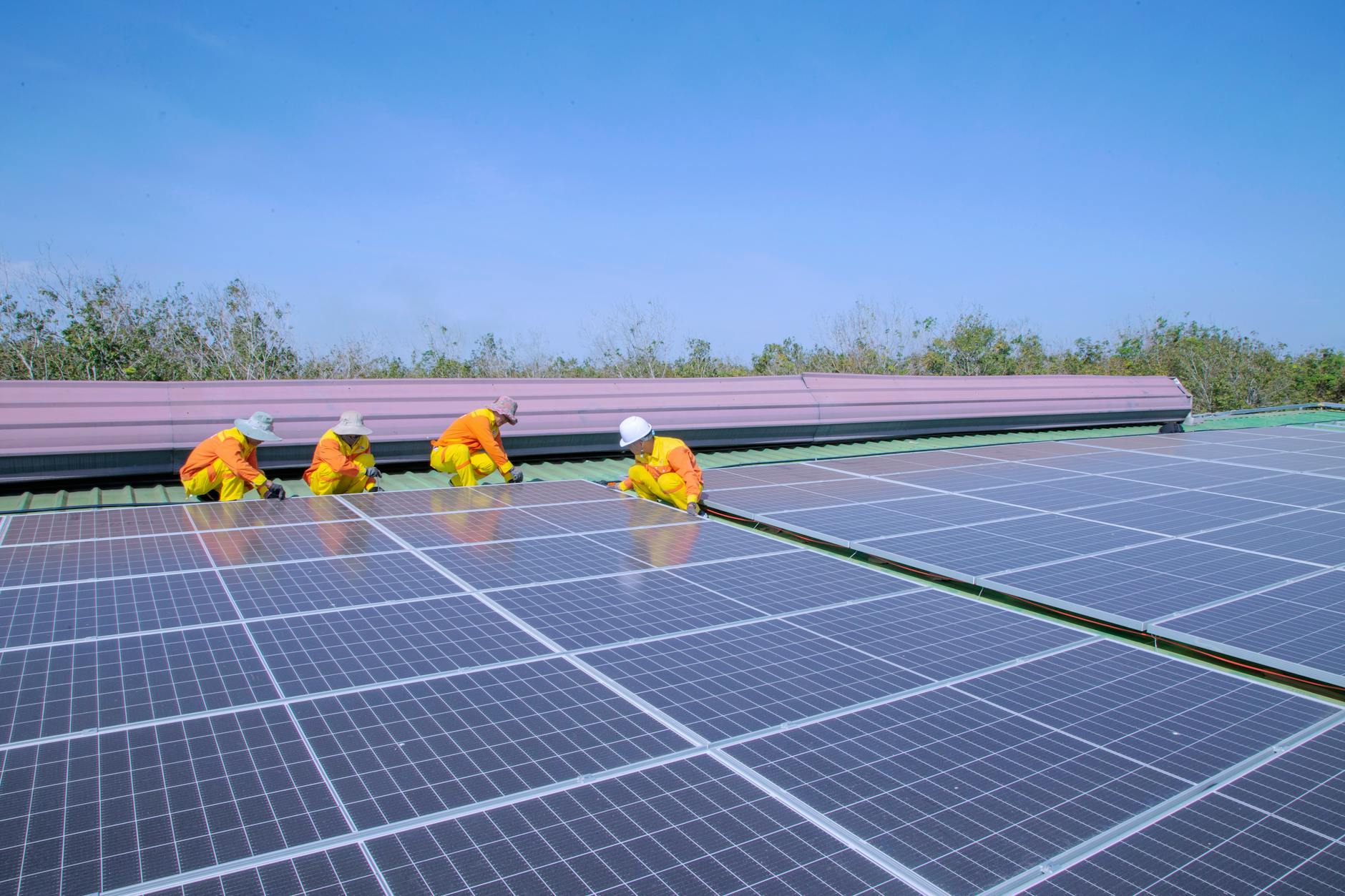
With the racking in place, the crew mounts the solar panels. Each panel weighs 40 to 50 pounds and clips onto the rails with mid-clamps and end-clamps. Two installers work on the roof while one or two crew members on the ground pass panels up using a ladder or hoist system.
A 20-panel system takes 2 to 3 hours to mount. The crew handles panel-level wiring at the same time, connecting microinverters (if used) or running string wiring to the combiner box.
Step 6: Inverter and Electrical Wiring
The electrician on the crew runs conduit from the roof junction box down to the inverter location (usually on an exterior wall near the electrical panel). For string inverter systems, a single inverter converts DC power from all panels into AC power. For microinverter systems, each panel has its own small inverter already attached during the mounting step.
The electrician wires the inverter to a dedicated solar breaker in the main electrical panel and installs a rapid shutdown device (required by NEC 2020 code). If battery storage is part of the system, the battery and transfer switch get wired in at this stage too.
Electrical work takes 3 to 5 hours and is the most technical part of the installation.
After Installation Day: Steps 7 Through 9
The panels are on the roof, but the system is not producing electricity yet. Three more steps have to happen before the system goes live.
Step 7: Utility Meter Swap
The utility company installs a bi-directional net meter that tracks both electricity consumed from the grid and electricity exported to the grid. Central Hudson and NYSEG handle this swap at no additional cost for most residential installations. Scheduling the meter swap takes 1 to 3 weeks after installation is complete.
Step 8: Municipal and Electrical Inspection
The local building department sends an inspector to verify the installation matches the approved permit drawings. They check electrical connections, grounding, rapid shutdown compliance, and fire setbacks. Most inspections take 30 to 60 minutes. If anything fails, the installer corrects it and reschedules. First-pass approval rates sit above 95% for experienced installers.
Step 9: Permission to Operate (PTO)
PTO is the green light from the utility company that allows the system to export power to the grid. Without PTO, turning on the system is a code violation. The utility reviews the inspection approval, confirms the meter swap, and issues PTO. This final step takes 1 to 4 weeks depending on the utility’s backlog.
Once PTO arrives, the installer remotely activates the system or walks the homeowner through the startup. The panels begin generating electricity immediately.
Installation Timeline: How Long Each Step Takes
The total timeline from signed contract to system activation runs 2 to 4 months for most Hudson Valley solar installations. Permitting and utility approvals account for 60% to 70% of that timeline. The physical installation is the shortest part.
Solar Installation Timeline by Step (Hudson Valley Averages)
| Step | Duration | What Causes Delays |
| Site assessment and design | 1 to 2 weeks | Scheduling availability, complex roof geometry |
| Permits and paperwork | 2 to 6 weeks | Slow municipalities, missing HOA approvals |
| Equipment delivery | 1 to 2 weeks | Supply chain issues, custom orders |
| Racking installation | 3 to 5 hours | Steep roof pitch, ground-mount foundation work |
| Panel mounting | 2 to 4 hours | Large systems (30+ panels), multi-plane roofs |
| Inverter and electrical wiring | 3 to 5 hours | Panel upgrades, battery integration |
| Utility meter swap | 1 to 3 weeks | Utility scheduling backlog |
| Municipal inspection | 1 to 2 weeks | Inspector availability, failed first pass |
| Permission to operate (PTO) | 1 to 4 weeks | Utility review backlog |
Winter installations are possible in New York. Crews install panels year-round as long as the roof is not covered in ice or snow. Cold weather does not affect panel performance. In fact, solar panels operate more efficiently in cooler temperatures.
Crew Size, Noise Level, and Safety Measures
A residential solar installation crew has 3 to 5 workers: at least one licensed electrician, two to three installers, and sometimes a project lead on site. The crew arrives between 7:30 and 8:00 AM and works until 4:00 to 5:00 PM.
Noise levels are moderate. The loudest part is drilling lag bolts into the roof rafters, which sounds similar to a construction-grade drill (about 85 to 90 decibels at close range). Panel mounting and wiring are much quieter. Neighbors within 50 feet may notice the noise during the racking phase, but it lasts under 2 hours.
Safety on the Job Site
Professional installers follow OSHA fall protection standards for any work above 6 feet. Crews use harnesses, anchor points, and guardrails on steep-pitch roofs. The work area below the roof gets cordoned off to keep homeowners, kids, and pets clear of falling tools or debris.Homeowners do not need to be home during installation, but someone should be reachable by phone in case the crew has questions about attic access, breaker panels, or internet connectivity for monitoring setup.
- All crew members carry fall protection gear (harness, lanyard, anchor)
- Electrical work performed with circuits locked out and tagged
- Ground-level staging area roped off during roof work
- Hard hats required for anyone below active roof work
──────────────────────────────────────────────────
Frequently Asked Questions
Q: How long does it take to install solar panels on a house?
A: The physical installation takes 1 to 3 days for most residential systems. A standard 8 kW system with 20 to 24 panels is completed in a single day by a crew of 3 to 5 workers. The entire process from contract to activation, including permits and utility approval, takes 2 to 4 months.
Q: Do homeowners need to be home during solar panel installation?
A: No. Homeowners do not need to be present during the installation. However, someone should be reachable by phone in case the crew has questions about property access, the electrical panel, or internet connectivity for monitoring equipment setup.
Q: What is Permission to Operate (PTO) and why does it matter?
A: PTO is formal authorization from the utility company that allows a solar system to export electricity to the grid. Without PTO, activating the system is a code violation. The utility issues PTO after confirming that the installation passed inspection and the net meter has been swapped. This final step takes 1 to 4 weeks.
Q: Can solar panels be installed in winter in New York?
A: Yes. Solar crews install panels year-round in New York. Cold temperatures do not affect installation quality, and panels actually produce electricity more efficiently in cooler weather. The only weather-related delays come from ice, heavy snow on the roof, or sustained high winds above 30 mph.
Q: How noisy is solar panel installation?
A: The loudest phase is drilling lag bolts into the roof rafters, which produces about 85 to 90 decibels (similar to a power drill). This lasts 1 to 2 hours. The rest of the installation, including panel mounting and wiring, is much quieter. Neighbors within 50 feet may notice noise during the racking phase but it does not last long.
Last updated: March 2026