
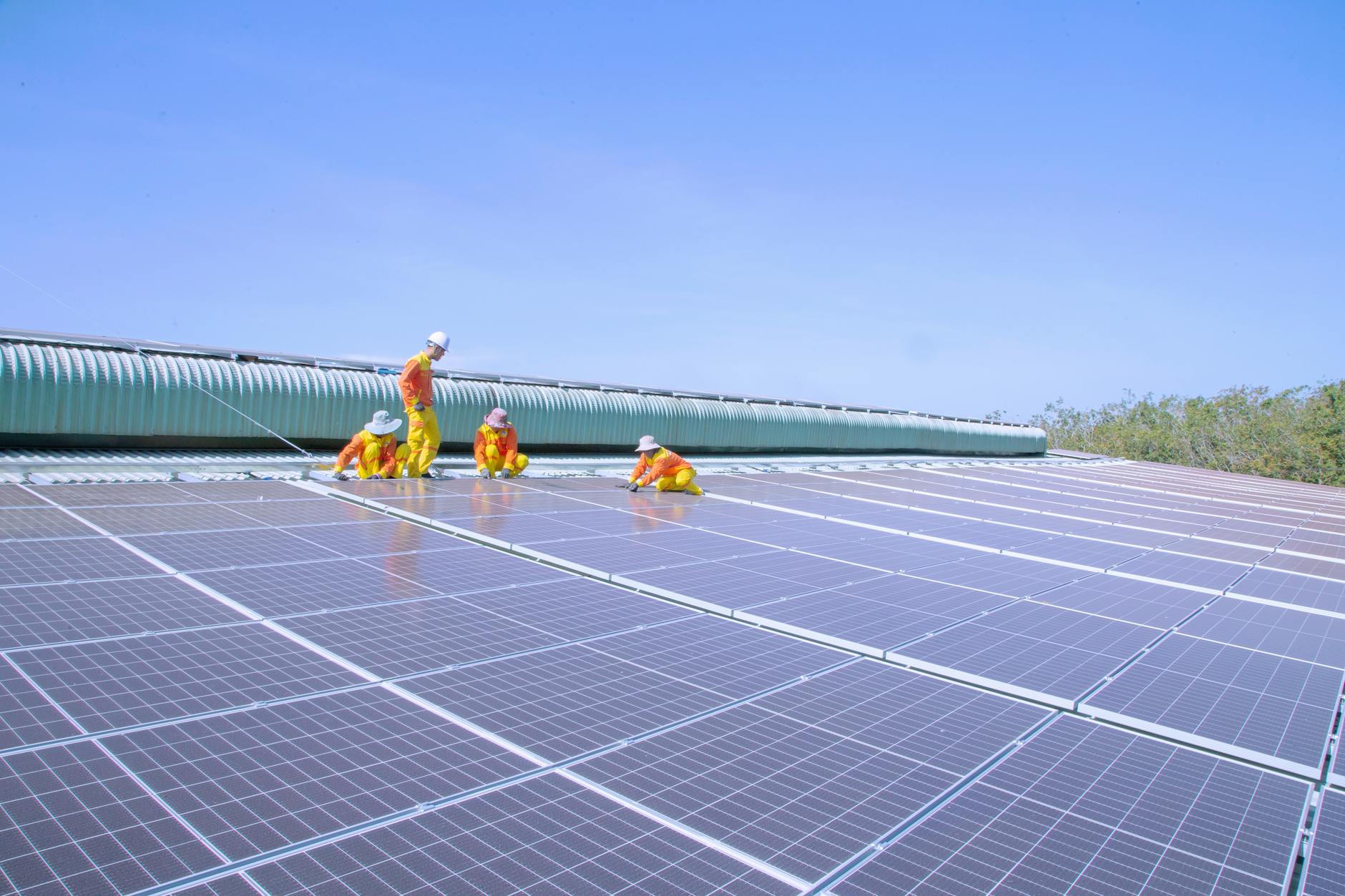
TL;DR: Solar panels are one of the lowest-maintenance home upgrades you can make. Rain handles most cleaning, monitoring apps catch performance issues early, and a quick annual visual inspection covers the rest. The biggest threats in the Hudson Valley are squirrels nesting under panels and ignoring inverter warning lights.
──────────────────────────────────────────────────
The Truth About Solar Panel Maintenance
Solar panels have no moving parts. No oil to change, no filters to replace, no belts to wear out. A residential solar system installed in 2026 will run for 25 to 30 years with less hands-on maintenance than a dishwasher.
That surprises homeowners who expect solar to be high-maintenance, but the numbers back it up. According to the National Renewable Energy Laboratory (NREL), residential solar systems lose only 0.5% to 0.7% efficiency per year under normal conditions. The panels installed on a Hudson Valley rooftop today will still produce over 80% of their original output in 2051.
So what do homeowners actually need to do? Less than you think, but more than nothing. Here is the full breakdown.
Monitoring System Checks: Your First Line of Defense
Every modern solar installation comes with a monitoring app (Enphase, SolarEdge, or similar) that tracks energy production in real time. This app is the single most important maintenance tool a homeowner has.Check it once a month. That is all it takes. Look for two things:
- Daily production trends. A sudden drop on a sunny day signals a problem. Gradual seasonal changes are normal.
- Panel-level output. If one panel produces significantly less than its neighbors, something is blocking it or a connection has come loose.
Most monitoring platforms send automatic alerts when production drops below expected levels. Turn those notifications on and leave them on. A homeowner who catches a wiring issue in week one saves hundreds compared to discovering it six months later on an electric bill.
Solar Panel Cleaning: When to Do It (and When Not To)
Rain cleans solar panels. That is not a marketing claim. Panels are mounted at an angle, and water sheets across the glass surface, carrying dust, pollen, and bird droppings with it. In the Hudson Valley, annual rainfall averages 46 to 50 inches, which keeps panels performing within 2% to 5% of their clean-surface output.Manual cleaning makes sense in a few specific situations:
- Extended dry spells lasting four or more weeks (rare in upstate New York)
- Heavy pollen season if panels face a tree line
- Construction dust from nearby building projects
- Bird colonies roosting on or near the array
How to Clean Solar Panels Safely
If panels do need cleaning, use a garden hose from ground level. Spray water across the surface in the early morning or late evening when panels are cool. Cold water on hot glass can cause thermal stress and micro-cracks.
Do not use a pressure washer. Do not use abrasive sponges or household cleaners. Do not walk on the roof to scrub panels unless you are a trained professional with fall protection. A soft brush on an extension pole with plain water handles anything that rain cannot.
Some homeowners hire professional solar panel cleaning services once a year. For most Hudson Valley installations, this is unnecessary. But if panels are mounted at a low angle (under 15 degrees) where debris tends to accumulate, an annual professional wash can boost output by 3% to 5%.
Snow on Solar Panels: What to Do and What to Skip
Hudson Valley winters bring snow. Homeowners see white-covered panels and want to grab a rake. Resist that urge in most cases.
Solar panels are dark-surfaced and mounted above the roof with a gap. They warm faster than the surrounding roof, and snow slides off on its own within one to two days after a storm. The panels themselves are engineered to handle snow loads up to 112 pounds per square foot (5,400 Pa), well above anything a Hudson Valley winter delivers.
Snow and Solar Panels: Do vs. Don’t
| Action | Recommendation | Why |
| Wait for snow to melt off | Do this | Panels warm up and snow slides off within 1-2 days in most cases |
| Use a metal roof rake | Do not do this | Metal scratches the anti-reflective coating permanently |
| Use a soft foam solar snow tool | OK if panels are flat (<10 degrees) | Designed for solar surfaces; won’t scratch glass |
| Spray panels with warm water | Do not do this | Thermal shock can crack the glass |
| Brush off light, fluffy snow | Optional | Minimal risk if using a soft-bristle tool on an extension pole |
| Climb on the roof to clear panels | Never | Fall hazard; voids most workmanship warranties |
Removing snow with a roof rake or broom risks scratching the anti-reflective coating. One deep scratch can permanently reduce a panel’s output. The two days of lost production during a snow event cost far less than a scratched panel producing 10% below capacity for the next 20 years.
When Snow Removal Makes Sense
There are two exceptions. If panels are mounted nearly flat (under 10 degrees), snow may not slide off on its own. And after an ice storm that leaves a thick glaze, panels can stay covered for a week or more. In both cases, a soft foam snow removal tool designed for solar panels (not a metal roof rake) is the right choice. NYSSF can advise on the best tool for your specific installation.
Inverter Indicator Lights: What They Mean
The inverter is the box (usually mounted in the garage or near the electrical panel) that converts DC power from the panels into AC power for the home. It has indicator lights that communicate system status at a glance.
- Solid green: System is producing power normally.
- Flashing green: System is starting up (normal at dawn) or updating firmware.
- Yellow or amber: A minor fault has been detected. Check the monitoring app for details. This can mean a grid voltage fluctuation or a temporary communication error.
- Red or flashing red: The system has stopped producing. This requires attention. Check the monitoring app first, then contact the installer if the issue persists beyond 24 hours.
- No lights at all: The inverter has lost power. Check the breaker panel before calling for service.
String inverters (one box for the whole array) last 10 to 15 years and cost $1,000 to $2,500 to replace. Microinverters (one per panel) last 20 to 25 years and are covered under most manufacturer warranties for the full duration.
Annual Inspection Checklist
Once a year, walk around the property and run through this checklist. It takes about 15 minutes and catches 90% of potential issues before they become expensive.
Annual Solar Panel Inspection Checklist
| Check | What to Look For | Action if Found |
| Panel surfaces (from ground) | Cracks, discoloration, heavy debris buildup | Photo and send to installer |
| Wiring and conduit | Exposed wires, chew marks, loose connectors | Call installer immediately (fire risk) |
| Inverter lights | Red light, no lights, or persistent yellow | Check app, reset breaker, call if unresolved |
| Panel edges and underside | Nesting material, animal droppings, debris | Schedule critter guard install or cleanup |
| Mounting hardware | Loose bolts, rust, shifted panels | Call installer for tightening/inspection |
| Monitoring app data | Year-over-year production comparison | Decline over 5% warrants a service call |
| Vegetation | Tree growth shading panels | Trim branches to maintain clear solar access |
This visual check does not require climbing on the roof. Binoculars or a phone camera with zoom handle the panel surface inspection just fine from ground level. If anything looks wrong, take a photo and send it to the installer before attempting any fixes.
Critter Guards: Protecting Panels from Squirrels and Birds
Squirrels, birds, and raccoons cause more solar panel damage in the Hudson Valley than weather does. The gap between panels and the roof is warm, sheltered, and predator-free. Animals nest there, chew wiring insulation, and drag debris across panel surfaces.Critter guards (mesh screens that clip around the panel edges) block animal access without affecting airflow. They cost $500 to $1,500 for a typical residential array, installed. That investment pays for itself the first time it prevents a squirrel from chewing through a DC wire, which can cost $300 to $800 to repair and creates a fire hazard.Signs that critters have moved in under the panels:
- Scratching or scurrying sounds from the roof
- Nesting material visible at panel edges
- Unexplained drop in one or two panels on the monitoring app
- Chew marks on visible wiring
NYSSF installs critter guards as part of the initial installation on request, and can retrofit them onto existing systems. If you hear animals under the panels, call sooner rather than later.
Warranty Implications of DIY Maintenance
Solar panel warranties cover 25 years of performance. Inverter warranties cover 10 to 25 years depending on the type. But both warranties have conditions, and DIY maintenance can void them if things go wrong.Safe for homeowners to do without warranty risk:
- Hosing panels from ground level with plain water
- Checking the monitoring app
- Visual inspection from the ground
- Resetting the inverter by flipping the breaker (check your manual first)
Activities that can void your warranty or create safety hazards:
- Opening the inverter housing or junction boxes
- Touching or reconnecting DC wiring
- Pressure washing panels
- Walking on panels
- Applying chemical cleaners or coatings
The rule is straightforward: if it involves electricity or climbing on the roof, call a licensed solar technician. The cost of a service call ($150 to $300) is a fraction of the cost of a voided warranty or a fall.
When to Call Your Solar Installer
Most homeowners will call their installer fewer than five times over the life of a 25-year system. But knowing when to pick up the phone saves money and prevents small problems from becoming big ones.Call the installer if:
- The monitoring app shows a production drop of 15% or more that lasts longer than two sunny days
- The inverter shows a red light or has been offline for 24+ hours
- You see physical damage to panels after a storm (hail cracks, fallen branches)
- Critter damage is visible on wiring or panel edges
- Your electric bill spikes unexpectedly despite no change in usage
- The system is approaching its 10-year mark (a good time for a professional checkup)
NYSSF offers post-installation support and maintenance services for every system installed. A quick phone call to describe the issue is free, and most problems can be diagnosed remotely through the monitoring platform before a truck rolls.
──────────────────────────────────────────────────
Frequently Asked Questions
Q: Do solar panels need maintenance?
A: Solar panels need very little maintenance. They have no moving parts, and rain handles most cleaning. Homeowners should check the monitoring app monthly, do a visual inspection once a year, and call the installer if production drops or damage appears. That covers 95% of what is needed.
Q: How often should you clean solar panels in New York?
A: Most Hudson Valley homeowners never need to manually clean their panels. Annual rainfall of 46 to 50 inches keeps surfaces clear enough for near-optimal production. Manual cleaning only makes sense after extended dry spells, heavy pollen seasons, or if panels are mounted at very low angles where debris accumulates.
Q: Should you remove snow from solar panels?
A: In most cases, no. Snow slides off angled panels within one to two days. Attempting removal with a roof rake or broom risks scratching the panel surface, which permanently reduces output. The only exceptions are nearly flat panels or thick ice glazing, and even then, only use a foam tool designed for solar panels.
Q: Will cleaning my solar panels void the warranty?
A: Rinsing panels with a garden hose from ground level will not void any warranty. Pressure washing, applying chemical cleaners, or walking on panels can void manufacturer and installer warranties. Stick to plain water and soft tools, and let professionals handle anything beyond a simple rinse.
Q: How do I know if my solar panels are working properly?
A: Check the monitoring app on your phone. Every modern system (Enphase, SolarEdge, and others) provides real-time production data at the panel level. A green light on the inverter and production numbers matching seasonal expectations means everything is running correctly. A sudden drop on a sunny day is the clearest sign something needs attention.
Q: Do squirrels really damage solar panels?
A: Yes. Squirrels, birds, and raccoons nest in the warm gap between panels and the roof. They chew through DC wiring insulation, which causes production drops and creates fire hazards. Critter guards (mesh screens around panel edges) cost $500 to $1,500 installed and prevent the problem entirely.
Last updated: March 2026