
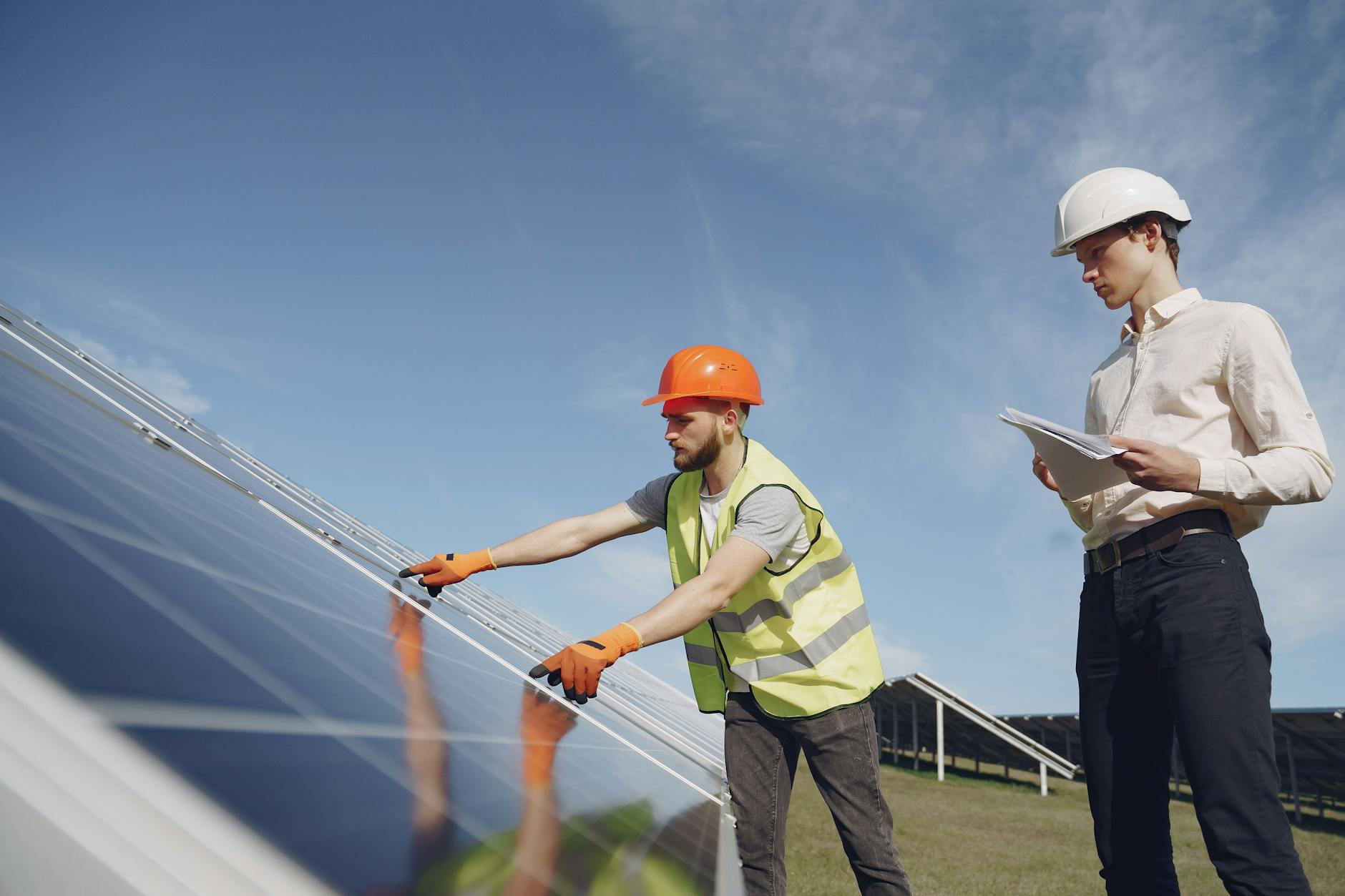
TL;DR: Solar site assessment factors fall into four categories: roof condition, shading, orientation, and electrical infrastructure. South-facing roofs at 30 to 35 degrees produce the most energy in New York. Heavy shade and 100-amp panels can add thousands to project costs. Every factor here directly affects system size, production estimates, and total price.
──────────────────────────────────────────────────
Why Solar Site Assessment Factors Matter More Than Panel Brand
Most homeowners start their solar research by comparing panel brands and inverter specs. That is backwards. The single biggest variable in a solar installation’s performance is the property itself. Two identical homes on the same street can produce wildly different amounts of energy based on roof angle, tree coverage, and electrical panel age.
A 2024 NREL study found that shading alone accounts for a 10% to 25% drop in system output. Roof orientation adds another 5% to 20% swing. These are not small numbers when a typical Hudson Valley system costs $25,000 to $40,000 before incentives. Understanding each solar site assessment factor helps you spot which quotes are realistic and which installers are cutting corners.
Roof Condition and Material: The Foundation of Every Solar Project
Solar panels last 25 to 30 years. The roof underneath them needs to last at least that long too. Removing and reinstalling panels for a mid-life roof replacement costs $2,000 to $5,000, so assessors treat roof condition as the first pass/fail gate.
Roof Material Lifespan and Solar Compatibility
Not every roofing material works equally well for solar. Asphalt shingles are the most common in the Hudson Valley, and they pair well with standard penetrating mounts. But shingle age matters. A 20-year-old asphalt roof with 5 years of life left is a dealbreaker until it gets replaced.
Metal roofs are the best match for solar. Standing-seam metal allows clamp-on mounts with zero roof penetrations, which means no leak risk. Slate and clay tile require specialized brackets and careful handling to avoid cracks. Flat roofs work fine but need ballasted or tilted racking systems.
Roof Material Comparison for Solar Installations
| Roof Material | Typical Lifespan | Solar Compatibility | Mount Type | Key Consideration |
| Asphalt Shingle | 20-30 years | Good | Penetrating lag bolts with flashing | Replace roof first if over 15 years old |
| Standing-Seam Metal | 40-70 years | Excellent | Clamp-on (no penetrations) | Best long-term match for solar panels |
| Flat (TPO/Rubber) | 20-30 years | Good | Ballasted or tilted racking | Adds weight; structural check critical |
| Slate | 75-100+ years | Difficult | Specialized slate hooks | Risk of cracking tiles; expensive repair |
| Clay/Concrete Tile | 50-100 years | Moderate | Tile replacement brackets | Requires experienced installer |
| Wood Shake | 20-40 years | Poor | Not recommended | Fire risk; most installers will decline |
Structural Integrity and Load Capacity
Solar panels add 2.5 to 4 pounds per square foot to a roof. The assessor checks rafters, trusses, and decking for signs of sagging, rot, water damage, or insect damage.
Homes built before 1970 in the Hudson Valley sometimes have undersized rafters (2×4 instead of 2×6 or 2×8). These need sistering (reinforcement lumber alongside existing rafters) before they can support panels plus snow load. New York building code requires roofs to handle 30 to 50 pounds per square foot of snow, and solar panels must not push the structure past that limit.
Roof Orientation and Pitch: How Direction Affects Production in New York
Roof orientation is the second biggest factor in solar energy production after shading. A south-facing roof at the right pitch angle captures the most sunlight throughout the year in New York. But “south-facing” is not the only option that works.
Orientation and Production Differences
True south (180 degrees azimuth) is the gold standard for solar in the Northern Hemisphere. Southeast and southwest orientations produce 80% to 92% of a south-facing roof’s output, which is smaller than most people expect. East or west-facing roofs drop to 65% to 75% and need more panels to reach the same energy target.
North-facing roofs are almost never suitable for solar in New York. Production drops below 55%, and the payback period stretches past 15 years even with state incentives.
Roof Orientation and Expected Solar Production in New York
| Roof Orientation | Azimuth (Degrees) | % of South-Facing Output | Suitability |
| Due South | 180 | 100% | Ideal |
| Southeast | 135-160 | 88-92% | Excellent |
| Southwest | 200-225 | 85-92% | Excellent |
| East | 90 | 65-75% | Workable (more panels needed) |
| West | 270 | 65-75% | Workable (more panels needed) |
| North | 0/360 | 45-55% | Not recommended |
Pitch and Tilt Angle for New York’s Latitude
The Hudson Valley sits at roughly 41 to 42 degrees latitude. The ideal tilt for maximum annual production is 30 to 35 degrees, matching most standard roof pitches (7/12 to 8/12 slope).
Steeper roofs (45+ degrees) favor winter production. Shallower pitches (15 to 20 degrees) favor summer. The annual difference between a 25-degree and 40-degree tilt is only 5% to 8%. Flat roofs get tilted racking that adds $0.10 to $0.25 per watt but dramatically improves output.
Shading Analysis: The Factor That Kills More Solar Projects Than Anything Else
Shade is the number one production killer for residential solar. Partial shade on a single panel can reduce output for an entire string of panels connected in series.
Common Shade Sources in the Hudson Valley
Trees are the biggest culprit. A maple tree that barely touches the roofline in July can block 40% of the roof in December when the sun sits 25 degrees lower in the sky. Deciduous trees cause seasonal shade patterns that summer-only assessments miss entirely.Other shade sources include:
- Neighboring buildings (especially in denser areas like Poughkeepsie, Newburgh, and Kingston)
- Chimneys, plumbing vents, and dormers on the home itself
- Utility poles and overhead power lines
Smart assessors also check for future shade risks. A 10-foot oak tree 30 feet from the house will be a 30-foot shade problem in 10 years.
Sun Path Tools and Shade Measurement
Professional assessors use devices like the Solmetric SunEye or Solar Pathfinder to map shade across every hour of every month. Both produce a “solar access percentage” for each roof section. Above 80% is good. Between 70% and 80% is workable but reduces ROI. Below 70%, most installers recommend tree trimming, removal, or switching to a ground-mount system.
Software tools like Aurora Solar and Helioscope model shade using 3D LiDAR data, but they cannot replace an in-person evaluation. Satellite images miss new construction, recent tree growth, and temporary obstructions.
Electrical Panel, Ground Conditions, and Infrastructure Factors
Roof and shading get the most attention, but several infrastructure factors can add cost or delay a solar project. Smart assessors check every item on this list during the first visit.
Electrical Panel Capacity: 100A vs 200A Service
The National Electrical Code (NEC 705.12) limits solar backfeed to 20% of the main breaker rating. For a 200-amp panel (standard in homes built after 1990), that allows up to 40 amps, supporting systems up to about 8 kW. That covers most Hudson Valley homes.
Older homes with 100-amp panels can only handle 20 amps of solar backfeed, limiting system size to about 4 kW. A panel upgrade from 100A to 200A costs $1,800 to $3,500 depending on electrician rates, permits, and whether the service entrance needs replacement. The assessor photographs the panel, counts breaker slots, and verifies the meter type for interconnection.
Attic and Rafter Access
Installers need access to the attic space (or crawl space beneath the roof deck) to verify structural framing and run conduit. Finished attics, cathedral ceilings, and spray-foam insulation can complicate access and add labor time. The assessor notes access points and any obstacles during the site visit so the installation crew knows what to expect.
Ground-Mount Conditions
When the roof is not suitable, a ground-mount system is the alternative. Ground mounts need 400 to 600 square feet of unshaded open ground. The assessor evaluates soil type, terrain slope, and distance from the electrical panel. Rocky soil or high water tables increase foundation costs, and every 50 feet of additional conduit run adds $500 to $1,000.
Utility Meter Location and Internet Connectivity
The utility meter location determines where the solar disconnect switch goes and how conduit runs to the interconnection point. Meters on the opposite side of the house from the panels mean longer runs and higher labor costs.
Modern inverters (Enphase, SolarEdge) send real-time production data to monitoring apps over Wi-Fi. Without a stable signal at the inverter location, production problems go undetected. Cellular backup gateways cost $150 to $300 extra. The assessor checks signal strength and notes whether an extender or gateway is needed.
Solar Assessment Checklist: Every Factor in One Place
Use this checklist during a solar site assessment to make sure nothing gets skipped.
Solar Site Assessment Checklist
| Assessment Factor | What the Assessor Checks | Red Flag If Missed |
| Roof Age/Material | Shingle type, age, remaining lifespan, damage | Panels installed on a failing roof cost $2K-$5K to remove later |
| Structural Integrity | Rafters, trusses, decking, sagging, rot | Roof collapse risk under panel + snow weight |
| Roof Orientation | Compass direction of usable roof faces | North-facing installs produce 45-55% less energy |
| Pitch/Tilt Angle | Roof slope measured in degrees or rise/run | Flat panels lose 10-15% output vs optimal tilt |
| Shading Analysis | Trees, buildings, chimneys mapped across all seasons | Summer-only shade check misses winter production loss |
| Electrical Panel | Amperage, breaker slots, wiring condition, meter type | 100A panel limits system to ~4 kW without $1,800-$3,500 upgrade |
| Attic/Rafter Access | Entry points, insulation type, obstructions | No access means blind structural assumptions |
| Ground-Mount Option | Soil type, slope, open space, distance to panel | Rocky soil or long trenching runs increase costs significantly |
| Utility Meter | Location, type, distance from planned array | Long conduit runs add $500-$1,000 per 50 feet |
| Internet Connectivity | Wi-Fi signal at inverter location | No monitoring means production problems go undetected |
If an installer skips the shading analysis or does not check the electrical panel, that is a red flag.
──────────────────────────────────────────────────
Frequently Asked Questions
Q: What do solar assessors look at during a site visit?
A: Solar assessors evaluate roof condition, structural load capacity, orientation, pitch, shading, electrical panel amperage, attic access, ground-mount feasibility, meter location, and internet connectivity. A thorough assessment covers all factors in a single 1 to 2 hour visit.
Q: Does roof orientation really matter that much for solar in New York?
A: Yes. A south-facing roof produces 100% of potential output, while east or west-facing roofs drop to 65% to 75%. Southeast and southwest orientations perform well at 85% to 92%. The production gap between south and east/west means you need more panels to hit the same energy target, which raises total cost by 15% to 30%.
Q: Can solar panels go on a 100-amp electrical panel?
A: Solar panels can connect to a 100-amp panel, but the system size is limited to roughly 4 kW due to NEC 705.12 backfeed rules. Most Hudson Valley homes need 6 to 10 kW systems to offset their electric bills. Upgrading to a 200-amp panel costs $1,800 to $3,500 and is one of the most common pre-installation expenses.
Q: How do assessors measure shading on a roof?
A: Assessors use a Solmetric SunEye or Solar Pathfinder to capture shade data across every hour and month. These tools generate a solar access percentage for each roof section. Software like Aurora Solar supplements on-site data with 3D LiDAR, but in-person evaluation catches what satellites miss.
Q: Should the roof be replaced before installing solar panels?
A: If the roof has fewer than 10 years of life remaining, replacing it before solar installation saves money in the long run. Removing and reinstalling panels for a mid-life roof replacement costs $2,000 to $5,000. Asphalt shingle roofs over 15 years old and wood shake roofs are the most common candidates for pre-solar replacement.
Q: What makes a property unsuitable for rooftop solar?
A: Heavy year-round shading (solar access below 60%), a north-facing-only roof, structural damage beyond economic repair, and historic building restrictions are the main disqualifiers. Properties with these issues can still use a ground-mount system if they have 400 to 600 square feet of open ground.
Last updated: March 2026