
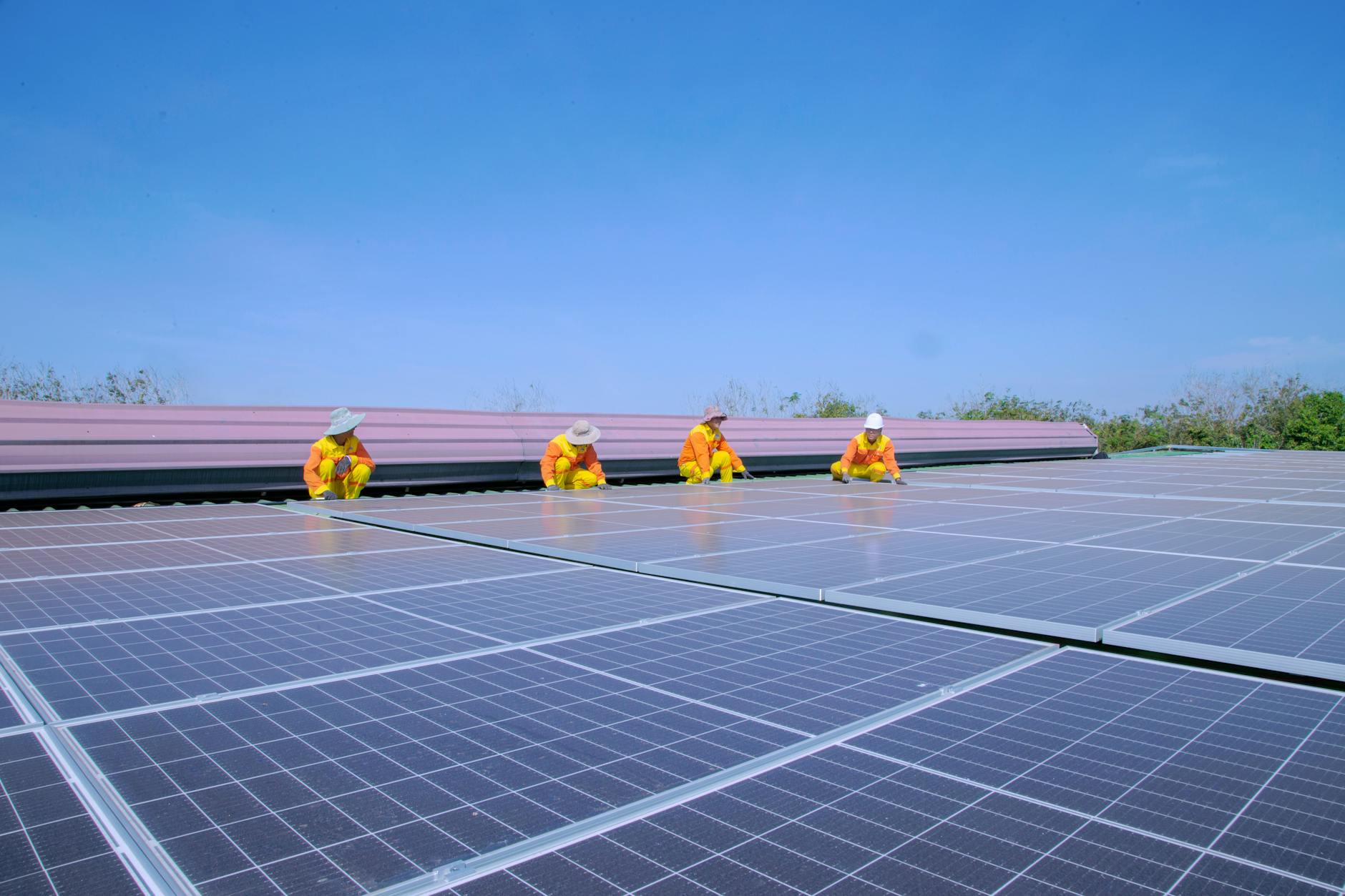
TL;DR: Solar system design depends on roof orientation, pitch angle, shading from trees and structures, panel wattage, inverter type, NY setback requirements, fire code clearances, electrical panel capacity, and snow load ratings. South-facing roofs at 30 to 35 degrees produce the most energy in the Hudson Valley. Microinverters handle shading better than string inverters. New York fire code requires 3-foot ridge setbacks and 18-inch pathways for firefighter access.
──────────────────────────────────────────────────
Why Solar System Design Matters More Than Panel Brand
Two identical solar panels installed on two different roofs will produce very different amounts of energy. The difference comes down to design: how panels are positioned, angled, wired, and spaced on the roof. A well-designed 8 kW system can outperform a poorly designed 10 kW system in real-world production.
Solar system design accounts for everything from the angle of the roof to the size of the electrical panel in the basement. Getting these details right before installation begins is what separates a system that meets its production estimates from one that falls short year after year.
Roof Orientation and Pitch Angle
Roof orientation (the compass direction a roof slope faces) and pitch (the steepness of the slope measured in degrees) are the two most important factors in solar panel layout. Together, they determine how much direct sunlight hits the panels throughout the day and across all four seasons.
Best Roof Direction for Solar in the Hudson Valley
South-facing roofs capture the most sunlight in New York because the sun tracks across the southern sky year-round. A true-south orientation produces 100% of potential output. Southwest and southeast orientations lose about 5% to 10% compared to due south. West-facing and east-facing roofs lose 15% to 20%. North-facing slopes lose 30% or more and are rarely worth installing panels on.
Most homes in the Hudson Valley have roof sections facing multiple directions. A good solar design uses the south-facing sections first, then adds panels to east or west sections if more capacity is needed.
Optimal Tilt Angle for New York Latitude
The Hudson Valley sits between 41 and 42 degrees north latitude. The ideal fixed tilt angle for year-round production is 30 to 35 degrees. This angle balances summer sun (when the sun is high) and winter sun (when the sun is low on the horizon).
Roof pitches are measured in rise over run. A 7/12 pitch equals roughly 30 degrees and a 8/12 pitch equals roughly 33 degrees. Both are close to ideal for the region. Steeper roofs (10/12 pitch, about 40 degrees) produce slightly more in winter but less in summer. Flat or near-flat roofs (under 15 degrees) need tilt-mount racking to bring panels closer to the optimal angle.
Shading Analysis: Trees, Chimneys, and Dormers
Shade on even a small portion of a solar array can cut energy production dramatically. A thorough shading analysis before installation identifies problem areas and shapes the final panel layout.
How Shade Affects Solar Output
When shade falls on one cell of a solar panel, that cell stops producing electricity and becomes a resistor. Because cells within a panel are wired in series, one shaded cell reduces the output of the entire panel. In a string inverter system, one shaded panel can drag down every other panel on that same string. A single chimney shadow crossing two panels at midday can reduce string output by 30% to 50%.
Common Shade Sources on Hudson Valley Homes
Trees are the primary shade source in the region. Oaks, maples, and pines grow tall enough to cast shadows across rooftops, and they keep growing after the system is installed. Deciduous trees lose their leaves in winter but still cast branch shadows that reduce output by 10% to 15%.
Chimneys, plumbing vents, dormers, satellite dishes, and neighboring structures all create shade zones. Designers use shade analysis tools (Suneye, Aurora Solar, or similar software) that model shadow patterns across every hour of every month to map exactly where shade falls on the roof.
Designing Around Shade
The best approach is to avoid shaded areas entirely. Panels placed in full-sun zones produce more energy per dollar than panels placed in partial shade with added electronics to compensate. When shade is unavoidable on part of the roof, the inverter choice becomes critical (see the inverter section below).
Panel Wattage Selection and Layout Density
Solar panels now range from 350 watts to 440 watts for residential models. Higher-wattage panels produce more electricity per square foot of roof space, which matters when roof area is limited.
Residential Solar Panel Wattage Comparison
| Panel Wattage | Efficiency Rating | Panels for 8 kW System | Approx. Roof Area Needed | Cost per Panel |
| 370W (Standard) | 19-20% | 22 panels | 385 sq ft | $180-$220 |
| 400W (Mid-Range) | 20-21% | 20 panels | 350 sq ft | $220-$280 |
| 430W (Premium) | 21-22% | 19 panels | 330 sq ft | $280-$350 |
| 440W (High-End) | 22-23% | 18 panels | 315 sq ft | $320-$400 |
A roof with 400 square feet of usable space fits about 16 standard-size panels (roughly 17.5 sq ft each). With 370W panels, that produces 5.92 kW. With 430W panels on the same roof, output jumps to 6.88 kW. That is nearly 1 kW more from the same roof footprint.
Higher-wattage panels cost more per unit, but they reduce the total number of panels, racking hardware, and labor hours needed. On space-constrained roofs, premium panels are the smarter investment.
String Inverters vs. Microinverters: Impact on Panel Layout
The inverter type affects how panels are wired, where they can be placed, and how the system handles shade and panel-level issues.
String Inverters
A string inverter connects panels in a series circuit (a “string”). All panels on one string must face the same direction and sit at the same tilt angle. If one panel in the string is shaded or underperforming, the entire string output drops to match the weakest panel.
String inverters work well on roofs with one large, unshaded south-facing section. They cost less than microinverters (roughly $0.10 to $0.15 per watt) and are easier to service since the inverter sits at ground level near the electrical panel.
Microinverters
Microinverters mount directly behind each panel and convert DC to AC at the panel level. Each panel operates independently, so shade on one panel does not affect its neighbors. This makes microinverters the better choice for roofs with multiple orientations, partial shade, dormers, or irregular shapes.
Microinverters cost more (roughly $0.20 to $0.30 per watt) but increase total system production by 5% to 25% on shaded or multi-orientation roofs. They also provide panel-level monitoring, making it easy to spot a single underperforming panel.
Power Optimizers: A Middle Ground
DC power optimizers pair with a string inverter but add panel-level optimization. Each optimizer adjusts the voltage and current of its panel so one shaded panel does not limit the rest. Cost falls between string inverters and microinverters. SolarEdge is the most common optimizer-based system on the market.
Setback Requirements and Fire Code Clearances in New York
New York State and local municipalities enforce setback rules and fire code clearances that limit where panels can be placed on a roof. These rules exist for firefighter safety and structural access.
New York Solar Panel Setback and Clearance Requirements
| Requirement | Minimum Distance | Applies To | Code Reference |
| Ridge Setback | 36 inches | Top edge of array to roof peak | NY Fire Code 605.11 |
| Eave Pathway | 36 inches | One side of array, eave to ridge | NY Fire Code 605.11 |
| Roof Penetration Clearance | 18 inches | Around vents, chimneys, skylights | NY Fire Code 605.11 |
| Property Line Setback (Ground-Mount) | Varies by town | Distance from system to property line | Local Zoning Code |
| Electrical Clearance | 3 feet | Around electrical equipment on roof | NEC Article 110 |
NY Fire Code Solar Panel Requirements
The 2020 Fire Code of New York State (based on the International Fire Code) requires:
- A minimum 36-inch (3-foot) clear pathway from the ridge (peak) of the roof down to the eave on at least one side of the array
- An 18-inch clear space around roof penetrations (vents, chimneys, skylights)
- A 36-inch pathway from the eave to the ridge for firefighter access on steep roofs
- Rapid shutdown capability so panels de-energize within 30 seconds of system shutdown
These clearance zones reduce the usable roof area by 10% to 20% on most homes. A roof that appears to fit 30 panels may only accommodate 24 after fire code setbacks are applied.
Local Setback Variations in the Hudson Valley
Individual towns and counties in the Hudson Valley can add their own rules on top of state requirements. Some municipalities require panels to be set back 3 feet from all roof edges, not just the ridge. Others restrict ground-mounted systems to side or rear yards with specific distance requirements from property lines. Always confirm local setback rules with the building department before finalizing a design.
Electrical Panel Capacity
The home’s main electrical panel must have enough capacity to accept power from the solar system. This is a code requirement under the National Electrical Code (NEC) 705.12, known as the “120% rule.”
The 120% Rule Explained
The NEC limits the total amperage feeding a busbar to 120% of its rating. A standard 200-amp panel has a 200-amp main breaker. The solar backfeed breaker size is limited to 40 amps (200A x 120% = 240A, minus the 200A main breaker = 40A). A 40-amp breaker supports roughly 7.6 kW of solar at 240 volts.
If the solar system requires more than 40 amps of backfeed, the installer must either upgrade the main panel to a 225-amp or 320-amp version, add a line-side tap, or install a feed-through lug kit. Older homes with 100-amp or 150-amp panels face tighter limits and almost always need an upgrade.
Panel Upgrade Costs
Upgrading from a 100-amp to a 200-amp electrical panel costs $1,500 to $3,000 in the Hudson Valley, including labor and permits. Upgrading from 200-amp to 400-amp runs $3,000 to $5,000. These costs are separate from the solar installation and should be factored into the total project budget early in the design phase.
Snow Load Considerations for New York Solar Installations
The Hudson Valley receives 30 to 50 inches of snow per year, with higher amounts in the Catskills and northern Dutchess County. Snow creates two concerns for solar systems: added weight on the roof structure and reduced energy production while panels are covered.
Structural Load Requirements
New York building codes require roofs to support a ground snow load of 30 to 50 pounds per square foot (psf) depending on the municipality. Solar panels add 2.5 to 4 psf of dead load to the roof. A structural engineer or the installer’s engineering team must verify that the roof can handle the combined dead load (panels plus racking) and live load (snow) without reinforcement.
Roofs built before 1980 may have undersized rafters or trusses that cannot support the additional weight. A structural review adds $200 to $500 to the project cost but prevents serious problems down the road.
Panel Tilt and Snow Shedding
Panels at steeper angles (30 degrees or more) shed snow faster than low-angle installations. The glass surface of solar panels is smoother than roofing shingles, so light snow slides off as soon as the sun warms the panel surface. Heavy snowfall (6+ inches) may sit longer, but snow guards at the bottom of the array prevent dangerous snow slides onto walkways or driveways below.
Flush-mount systems on low-pitch roofs (under 15 degrees) hold snow the longest. These systems may lose 3% to 5% of annual production to snow coverage in the Hudson Valley. Tilt-mounted systems on flat roofs reduce this loss significantly.
──────────────────────────────────────────────────
Frequently Asked Questions
Q: Does roof direction really matter for solar panel output?
A: Yes. South-facing roofs produce the most energy in New York, capturing direct sunlight throughout the day. East and west-facing roofs produce 15% to 20% less. North-facing slopes lose 30% or more and are rarely cost-effective for panel installation.
Q: What is better for a shaded roof: string inverters or microinverters?
A: Microinverters perform better on shaded roofs because each panel operates independently. With a string inverter, shade on one panel reduces the output of every panel on that string. Microinverters cost more upfront but recover the difference through higher production on shaded or multi-direction roofs.
Q: How much roof space do fire code setbacks take away from a solar installation?
A: Fire code clearances reduce usable roof area by 10% to 20% on most homes. The required 3-foot ridge pathway and 18-inch clearances around vents, chimneys, and skylights eliminate space that might otherwise hold 4 to 6 panels.
Q: Can a 100-amp electrical panel handle a solar system?
A: A 100-amp panel limits solar backfeed to about 20 amps under the NEC 120% rule, supporting roughly 3.8 kW. Most residential solar systems are 6 kW to 12 kW, so a panel upgrade to 200 amps or higher is almost always necessary. Budget $1,500 to $3,000 for the upgrade.
Q: Do solar panels add too much weight for older roofs in New York?
A: Solar panels add 2.5 to 4 pounds per square foot to a roof. Most roofs built to NY code handle this without problems. Older homes (pre-1980) may have undersized rafters and should have a structural review before installation. Reinforcing a roof section costs $1,000 to $3,000 depending on the scope.
Q: How much solar production is lost to snow in the Hudson Valley?
A: Panels at 30 degrees or steeper lose about 1% to 3% of annual production to snow. Flat or low-angle panels lose 3% to 5%. Light snow slides off quickly when the sun heats the glass surface. Heavy snowfall may cover panels for 1 to 3 days before clearing.
Last updated: March 2026