
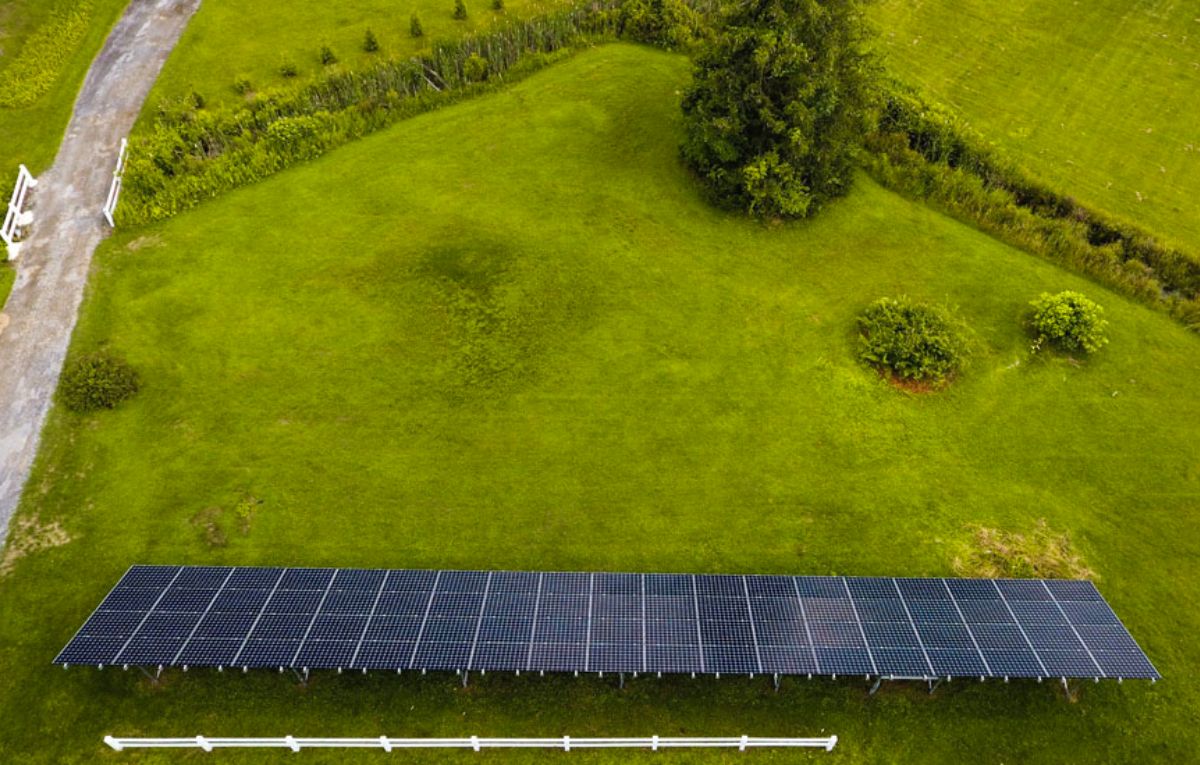
- Solar panels can power agricultural irrigation systems when the system is designed around pump size, water demand, sunlight, and seasonal farm use.
- A well-planned solar irrigation setup can help farms reduce electric costs, support remote water needs, and make energy use more predictable.
- New York State Solar Farm provides agricultural solar planning for farms and rural properties in New York.
Solar panels can be used to power irrigation systems in agricultural settings. The right setup depends on how much water the farm needs, how powerful the pump is, when irrigation runs, whether utility power is available, and whether the farm needs backup energy when sunlight is limited.
Solar irrigation can work for crop fields, orchards, vineyards, greenhouses, livestock watering, and remote water transfer. In some cases, the solar array can directly support irrigation loads. In other cases, a grid-tied solar system helps offset the electricity used by pumps over the course of the year.
How Solar-Powered Irrigation Works
A solar irrigation system uses solar panels to produce electricity that helps run a water pump. The pump may draw water from a well, pond, storage tank, stream, or municipal water source, depending on the farm.
The energy path usually includes:
- Solar panels that generate direct current electricity
- An inverter or pump controller that converts or manages power
- A pump that moves water through the irrigation system
- Optional batteries or water storage for use when sunlight is limited
- Electrical safety equipment and controls
The design can be simple or complex, depending on the farm. A small remote watering setup may only need a modest solar array and pump controller. A larger irrigation system may require detailed load calculations, electrical upgrades, utility coordination, and professional engineering.
Grid-Tied Solar vs. Off-Grid Solar for Irrigation
There are two common ways farms use solar for irrigation: grid-tied solar and off-grid solar.
Grid-Tied Solar Irrigation
A grid-tied solar system connects to the farm’s electrical service. The solar panels help offset the electricity used by irrigation pumps and other farm loads. When the panels produce more electricity than the farm is using at that moment, the extra power may be exported according to the utility’s rules.
Grid-tied solar is often the better fit when:
- The irrigation pump already has access to utility power.
- The farm has other electric loads outside the irrigation season.
- The system needs reliable power even when the weather changes.
- The farm wants to reduce total electricity costs over time.
- The pump load is too large for a simple off-grid setup.
This approach does not always mean the solar panels power the pump directly every minute it runs. Instead, the solar system helps reduce the farm’s overall energy use and utility costs.
Off-Grid Solar Irrigation
An off-grid solar irrigation system is not connected to the utility grid. It may power a pump directly during sunny periods, charge batteries, or fill a water storage tank for later use.
Off-grid solar may make sense when:
- The irrigation site is far from utility lines.
- Trenching or extending electric service would be expensive.
- Water demand is moderate and predictable.
- The farm can irrigate during sunny hours.
- Water storage can cover cloudy periods or overnight needs.
Off-grid systems require careful planning because the pump must have enough energy when water is needed. Batteries can help, but they add cost and maintenance considerations.
What Determines the Size of a Solar Irrigation System?
Solar irrigation design starts with water demand and pump load. The system should be sized for the actual job the pump needs to do, not just the number of acres on the farm.
Key factors include:
- Gallons of water needed per day or per week
- Pump horsepower and electrical demand
- How many hours does the pump run
- Water source depth and distance
- Pressure needed for sprinklers, drip irrigation, or other delivery methods
- Seasonal irrigation schedule
- Available sunlight during the irrigation season
- Existing utility service and electrical panel capacity
- Whether the system needs batteries or water storage
- Future expansion plans
A farm with a low-pressure drip system may have very different energy needs than a farm using high-pressure sprinklers. A shallow pond pump may also require less energy than a deep well pump.
Pump Type Matters
The pump is one of the most important parts of the design. Solar planning should account for both the pump’s running power and its startup demand.
Common irrigation pump considerations include:
- Pump horsepower
- Voltage and phase requirements
- Flow rate
- Pressure requirements
- Depth to water
- Distance from water source to field
- Daily runtime
- Whether the pump runs continuously or in cycles
Some pumps are better suited for solar than others. If the pump is old, inefficient, or oversized, replacing or upgrading the pump may improve the overall solar design.
Battery Backup vs. Water Storage
Not every solar irrigation system needs batteries. In many agricultural settings, storing water can be more practical than storing electricity.
When Battery Storage Helps
Battery storage may help if the farm needs irrigation at night, during cloudy periods, or during outages. Batteries can also support control systems, monitoring equipment, or smaller loads tied to the irrigation setup.
Battery storage may be worth considering when:
- Water must be delivered at specific times.
- Pump operation cannot depend only on sunlight.
- The farm needs backup power for critical loads.
- The irrigation system is remote and off-grid.
When Water Storage Makes More Sense
Water storage can be a simpler solution for some farms. In this setup, solar energy pumps water into a tank, pond, or reservoir during sunny hours. The stored water is then used later through gravity flow or a controlled irrigation system.
Water storage may make sense when:
- The crop can tolerate flexible irrigation timing.
- The farm has space for a tank or storage system.
- The pump can run during peak sunlight.
- Battery cost would be too high for the project.
The best option depends on the farm’s water schedule and how critical uninterrupted irrigation is.
Benefits of Solar Irrigation for Farms
Solar-powered irrigation can offer several benefits when the system is designed correctly.
Potential benefits include:
- Lower long-term electricity costs
- More predictable energy expenses
- Power access for remote fields or water sources
- Reduced reliance on diesel or gas-powered pumps
- Support for seasonal farm operations
- Less exposure to utility rate increases
- Cleaner energy use for agricultural production
- Potential pairing with battery storage or water storage
Solar can be especially useful for farms with large daytime electric loads because solar production often lines up with irrigation demand.
Challenges to Plan For
Solar irrigation is not a one-size-fits-all solution. A system that works well for one farm may not fit another property.
Common challenges include:
- High pump startup demand
- Limited space for panels
- Shading from trees, barns, or terrain
- Seasonal mismatch between solar production and water demand
- Utility interconnection requirements
- Battery cost for off-grid or backup systems
- Structural or land-use limits
- Permitting and electrical code requirements
These challenges do not always prevent solar irrigation, but they do need to be addressed before installation.
Roof-Mounted vs. Ground-Mounted Solar for Irrigation
Agricultural properties often have more than one possible location for solar panels. The best site depends on available space, sun exposure, distance to electrical equipment, and the type of farm operation.
Roof-mounted solar may work well when barns, equipment buildings, or other structures have strong sun exposure and enough usable roof space. Ground-mounted solar may be a better option when roof space is limited, the best sunlight is away from buildings, or the farm wants easier access for maintenance.
For irrigation loads, distance matters. A solar array placed far from the pump or electrical service may require additional wiring, trenching, and planning.
Can Solar Irrigation Work During Cloudy Weather?
Solar panels still produce some electricity during cloudy weather, but production is lower than on bright sunny days. That is why solar irrigation systems should be designed around real operating conditions, not ideal conditions.
Farms that need reliable irrigation during cloudy periods may need:
- Utility grid support
- Battery storage
- Water storage
- A backup generator
- A pump schedule that can shift with sunlight
- A hybrid design that uses more than one energy source
The more critical the irrigation load, the more important backup planning becomes.
Questions to Answer Before Designing Solar for Irrigation
Before installing solar for an agricultural irrigation system, gather practical information about the farm’s water and energy needs.
Helpful questions include:
- What water source will the system use?
- How many gallons are needed during peak irrigation periods?
- What pump is currently installed?
- How many hours does the pump run each day?
- Does the pump run during the day, at night, or both?
- Is utility power available at the pump location?
- Is the irrigation system drip, sprinkler, pivot, or another setup?
- Is there room for water storage?
- Is there room for a ground-mounted solar array?
- Are future crop, field, or livestock needs expected to change?
These answers help determine whether the best design is grid-tied, off-grid, battery-supported, or paired with water storage.
When Solar Irrigation Is a Strong Fit
Solar irrigation may be a strong fit when a farm has good sun exposure, predictable water demand, meaningful pump-related electric costs, or remote water needs that are expensive to power through the grid.
It may also be a good fit for farms that want to reduce operating costs while investing in long-term energy infrastructure. The strongest projects usually begin with a detailed review of pump loads, site conditions, and seasonal water use.
Solar Irrigation FAQs
Can solar panels run a water pump directly?
Yes, some systems can run a pump directly when enough sunlight is available. Larger or more critical systems may need grid support, batteries, water storage, or a backup power source.
How many solar panels are needed to run an irrigation pump?
The number of panels depends on pump size, daily runtime, water pressure, flow rate, sunlight, and whether the system uses batteries or storage. A professional load calculation is needed for an accurate answer.
Can solar irrigation work for large farms?
Yes, but larger farms usually need more detailed design. The system may need a larger array, utility coordination, ground-mounted solar, multiple pumps, or a combination of solar and grid power.
Is off-grid solar irrigation practical?
It can be practical for remote sites with moderate water demand, flexible irrigation timing, and good sunlight. It becomes more complex when water demand is high or when irrigation must run at night.
Can solar irrigation reduce farm operating costs?
Solar can reduce long-term electricity costs when the system is properly designed and matched to the farm’s energy use. Savings depend on utility rates, system size, incentives, financing, and how much electricity the irrigation system uses.
Start Your Solar Irrigation Project With the Right System Design
Solar panels can power irrigation systems in agricultural settings, but the right design depends on water demand, pump requirements, utility access, site conditions, and backup needs. For many farms, solar irrigation is not just about panels. It is about matching energy production to real water use so the system supports the way the farm actually operates.
Contact New York State Solar Farm to learn how solar can support your farm’s irrigation needs.