
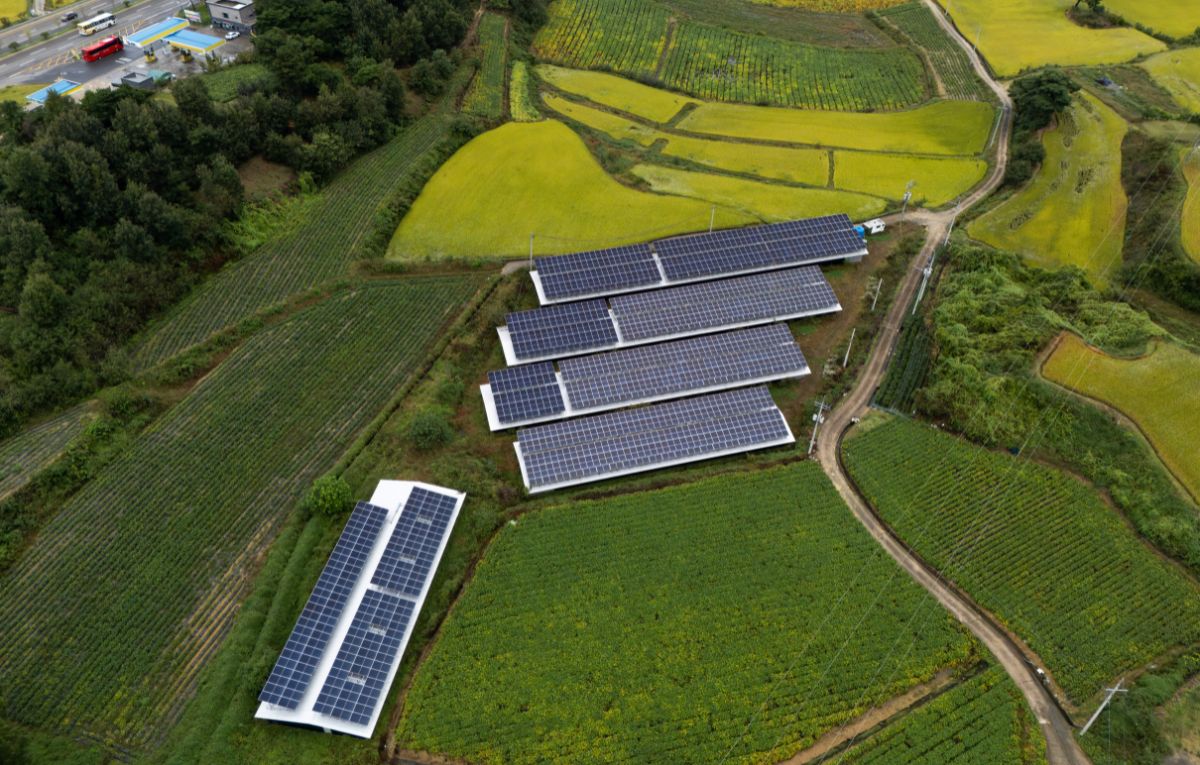
- On-grid solar connects to the utility network, while off-grid solar operates independently and must supply the property’s electricity without utility support.
- Grid-connected systems usually offer simpler energy management, while off-grid systems provide independence but require more storage, planning, and equipment.
- New York State Solar Farm helps New York homeowners evaluate grid-connected solar and battery storage for reliable, practical home energy.
The main difference between on-grid and off-grid solar systems is their relationship with the utility grid.
An on-grid system, also called a grid-tied system, remains connected to the utility. The home can use solar electricity when the panels are producing, draw electricity from the grid when production is not enough, and send excess generation to the grid when program and utility rules allow.
An off-grid system has no utility connection. It must produce and store enough energy to serve the property through nights, cloudy weather, seasonal changes, and periods of unusually high electricity use. Most residential off-grid systems therefore, need substantial battery storage and may also use a backup generator or another energy source.
For most homes that already have dependable utility service, an on-grid system is the more practical choice. Off-grid solar is generally considered for remote properties where utility service is unavailable, difficult to reach, or unusually expensive to extend.
On-Grid and Off-Grid Solar at a Glance
Utility connection
On-grid: Connected to the electric utility.
Off-grid: Operates without an electric utility connection.
Power when solar production is low
On-grid: The home can draw electricity from the grid.
Off-grid: The home relies on batteries, another power source, or reduced electricity use.
Excess solar production
On-grid: Excess electricity may be exported to the grid under the applicable utility program.
Off-grid: Excess electricity must be stored, used immediately, redirected to another load, or left unused.
Battery requirement
On-grid: Batteries are optional unless backup power or another storage benefit is desired.
Off-grid: Batteries are normally essential for a home that needs electricity after sunset or during low-sun periods.
Power outages
On-grid: A solar-only system normally shuts down during an outage. A properly designed solar and battery system may power selected circuits while safely disconnected from the grid.
Off-grid: A utility outage does not affect the system because it is not connected to the utility, but power still depends on available solar production, stored energy, and any backup source.
System complexity
On-grid: Usually simpler because the grid can cover shortfalls.
Off-grid: Requires closer coordination among solar production, battery capacity, inverter output, backup generation, and household energy use.
How an On-Grid Solar System Works
Solar panels generate direct current electricity. An inverter converts that electricity into alternating current that the home can use. The system connects to the home’s electrical equipment and the utility grid through an approved interconnection.
During sunny periods, the home uses available solar electricity first. If the panels produce less than the home needs, the grid supplies the difference. If the panels produce more than the home is using, the extra electricity may flow to the grid and receive credit under the applicable utility rules.
This arrangement lets homeowners reduce the amount of electricity they purchase without having to produce every kilowatt-hour at the exact moment it is needed. The grid effectively provides a second source of electricity whenever the solar array is not meeting the full load.
Homeowners who want details about applications, utility review, meters, and permission to operate can read New York State Solar Farm’s solar grid connection guide.
For a local example, see our page on solar panel installation in Kingston, NY, where grid-tied systems connect through Central Hudson.
How an Off-Grid Solar System Works
An off-grid solar system must operate as its own small power network. It cannot rely on the utility when electricity demand exceeds current solar production.
A typical residential off-grid system may include:
- Solar panels
- One or more inverters
- Battery storage
- Charge-control and energy-management equipment
- Electrical panels and safety equipment
- A backup generator or another generation source
- Monitoring equipment
System design starts with the property’s actual electricity needs. The installer or designer must consider daily consumption, peak loads, appliance startup requirements, seasonal sunlight, several days of poor weather, battery operating limits, and how much energy the occupants are willing to conserve.
An off-grid system that is too small can run out of usable stored energy. A system sized for rare worst-case conditions can require a large array and battery bank, which increases the initial cost and the amount of equipment that must be maintained.
Do Both Systems Need Batteries?
No. A grid-connected solar system can operate without batteries because the utility grid supplies electricity when the panels are not producing enough. Adding a battery is a separate design choice that may provide backup power, store solar energy for later use, or support other energy-management goals.
An off-grid home usually needs batteries because solar panels do not produce electricity at night and produce less during cloudy weather. Battery capacity must be planned around both the amount of energy the property uses and the length of time it may need to operate with limited solar production.
Battery capacity is only part of the decision. The inverter must also provide enough instantaneous power for the loads that may run at the same time. Large loads such as electric heating, central air conditioning, well pumps, electric water heaters, and vehicle charging can significantly affect off-grid system sizing.
What Happens During a Power Outage?
A standard grid-tied solar system without storage normally shuts down when the utility grid fails. This safety function prevents the solar system from sending electricity onto lines where utility crews may be working.
Adding batteries does not automatically guarantee that every appliance will operate during an outage. The system must include equipment that can disconnect the home from the grid and safely create an isolated source of power. The battery and inverter must also be sized for the circuits the homeowner wants to support.
Some systems back up only essential loads, such as refrigeration, lighting, communications, and selected heating equipment. Other systems are designed for broader home backup. Actual runtime depends on battery capacity, current solar production, weather, and the amount of electricity being used.
For a closer look at outage operation, read New York State Solar Farm’s guide to battery power during outages.
Which System Usually Costs More?
For a comparable property, a fully off-grid system will often require more equipment than a basic grid-tied system. Batteries, additional controls, backup generation, larger solar capacity, and more conservative design assumptions can all increase the initial investment.
Off-grid ownership can also involve long-term costs for battery replacement, generator fuel and maintenance, monitoring, and future equipment upgrades. The exact cost depends on the property, the loads, the desired level of autonomy, and the amount of backup capacity required.
A grid-tied system may avoid some of those costs because the utility covers periods when solar production is insufficient. A grid-connected homeowner can still add battery storage, but the battery can be sized around selected backup or energy-management goals instead of carrying the property’s entire electricity supply throughout the year.
Which System Is More Reliable?
Reliability depends on what risk the owner is trying to manage.
An on-grid system has access to two energy sources during normal operation: the solar array and the utility. If solar production falls, the grid supplies electricity. However, a solar-only grid-tied system does not provide power when the utility is down.
An off-grid system is unaffected by utility outages, but it has no utility backup if stored energy runs low or equipment fails. Its reliability depends heavily on correct sizing, battery condition, system monitoring, backup equipment, and the owner’s ability to manage energy use.
A grid-connected solar and battery system can offer a middle path. It uses the utility during normal operation and can isolate selected circuits during an outage when the equipment is designed for backup operation.
When On-Grid Solar Makes Sense
An on-grid system may be the better fit when:
- Reliable utility service already reaches the property.
- The main goal is to reduce electricity purchases and long-term energy costs.
- The homeowner wants access to applicable utility credit programs.
- The household does not want to manage a fully independent power supply.
- Battery backup is optional or limited to selected circuits.
- The property has substantial loads that would be expensive to serve entirely off-grid.
Most New York homeowners choose grid-connected solar. NYSERDA explains that remaining connected allows a home to draw electricity when solar production is insufficient and may allow excess production to be credited under the applicable program.
When Off-Grid Solar May Make Sense
Off-grid solar may be worth evaluating when:
- The property is remote and has no utility service.
- Extending utility lines would be difficult or expensive.
- Electricity use is modest, predictable, and manageable.
- The owner is comfortable monitoring energy production and storage.
- The property can accommodate enough solar and battery capacity.
- A backup energy plan is available for extended low-sun periods.
Common examples include remote cabins, agricultural equipment, water-pumping systems, communications equipment, and other isolated loads. A full-time home with electric heating, cooling, hot water, cooking, well pumps, and vehicle charging requires much more detailed planning.
Questions to Ask Before Choosing
Before deciding between grid-connected and off-grid solar, consider:
- Is utility power already available at the property?
- What would a new or extended utility connection cost?
- How much electricity does the property use each day and each season?
- Which appliances must operate during an outage?
- How long should backup power last?
- Is there room for the required panels, batteries, and related equipment?
- Are large electrical loads flexible, or must they run whenever needed?
- What maintenance and monitoring responsibilities are acceptable?
- Which permits, utility rules, and incentive requirements apply?
- Will future additions, such as an electric vehicle or heat pump, increase demand?
A design based only on annual electricity use can miss important details. Peak demand, winter production, appliance startup power, and outage priorities can change the equipment needed.
Frequently Asked Questions
Is on-grid solar the same as grid-tied solar?
Yes. On-grid, grid-tied, and grid-connected generally describe a solar system that is connected to the electric utility.
Can an on-grid solar system include a battery?
Yes. A grid-connected solar system can include battery storage. When the equipment is designed for backup operation, it can isolate from the grid and power designated circuits during an outage.
Can an off-grid solar system work without batteries?
Some specialized loads can operate only when solar power is available, such as certain daytime pumping applications. A typical home, however, needs stored energy or another power source for nights and low-production periods.
Will on-grid solar eliminate my electric bill?
Not necessarily. Solar may reduce electricity charges, but customers can still have utility account charges, taxes, program-specific charges, and electricity use that exceeds solar production. Results depend on system size, energy use, utility rates, and current compensation rules.
Is off-grid solar eligible for the same incentives as on-grid solar?
Eligibility depends on the program. NYSERDA currently notes that off-grid systems are not eligible for NY-Sun incentives. Homeowners should verify current requirements before making a financial decision because programs and rules can change.
Can I disconnect from the grid after installing solar and batteries?
Technical capability is only part of the decision. A property would need enough generation, storage, inverter capacity, backup planning, and code-compliant equipment to operate independently. Local requirements, financing agreements, warranties, and incentive terms may also apply.
Choosing the Right Solar Setup for Your Home
On-grid solar uses the utility as an available source of electricity when the panels cannot meet the home’s needs. Off-grid solar operates independently and must be designed to supply electricity through nights, poor weather, seasonal changes, and periods of high demand.
For most New York homes with existing utility service, grid-connected solar is simpler and more economical to manage. Homeowners who also want outage protection can add appropriately designed battery storage without giving up the everyday reliability of the grid. Off-grid solar is best reserved for properties where independence is necessary, and the owner is prepared for the additional equipment, cost, and energy management it requires.
Sources
- New York State Energy Research and Development Authority, Solar 101: https://www.nyserda.ny.gov/All-Programs/NY-Sun/On-site-Solar/Homes/Solar-101
- New York State Energy Research and Development Authority, Home Energy Storage: https://www.nyserda.ny.gov/All-Programs/Energy-Storage-Program/Home-Energy-Storage
- U.S. Department of Energy, Homeowner’s Guide to Solar: https://www.energy.gov/cmei/systems/homeowners-guide-solar