
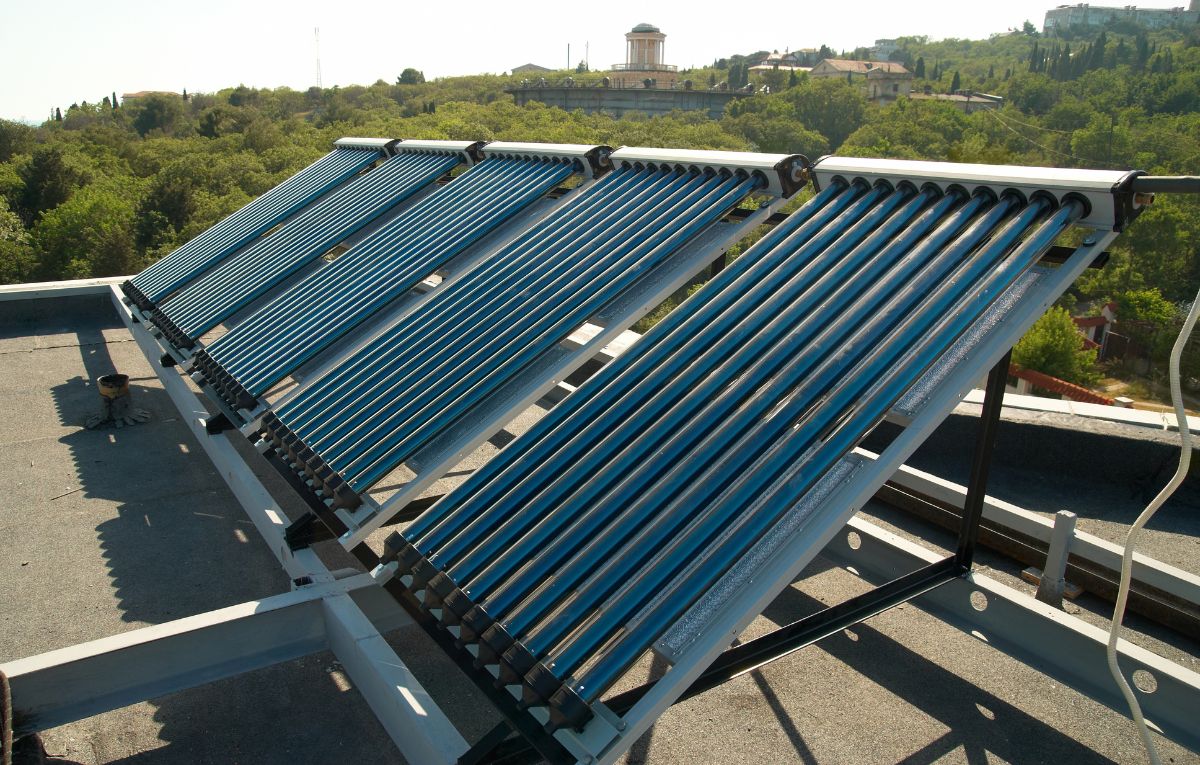
- Solar water heating uses energy from the sun to supply part of a property’s hot-water demand.
- A properly designed residential system may reduce conventional water-heating energy use by about half, although actual results vary.
- New York State Solar Farm helps New York homeowners evaluate solar water-heating systems built for the state’s climate and freeze-protection needs.
A solar water-heating system may replace about half of the conventional energy used to heat water in a typical home. ENERGY STAR states that a certified solar water heater can cut annual hot-water costs approximately in half. A U.S. Department of Energy field report found average electrical energy savings of about 2,500 kilowatt-hours per year among the monitored residential systems in its later group of studies. Those systems generally produced solar fractions between 50 and 60 percent.
That figure is a planning reference, not a guarantee. The actual savings depend on hot-water demand, local sunlight, collector size and orientation, storage capacity, the backup heater, pipe losses, pump electricity, and system condition.
What the Energy Savings Figure Represents
Solar water heating transfers heat from a solar collector to water or to a heat-transfer fluid. That heat reduces the work required from a conventional electric, gas, oil, or other backup water heater.
Most residential systems retain a backup heater. Solar energy supplies part of the annual hot-water load, while the backup system supplies the rest during cloudy periods, high-demand periods, maintenance, and times when stored water has not reached the required temperature.
Energy savings refer to the electricity or fuel that the solar equipment replaces. Dollar savings are different because they also depend on utility rates, fuel prices, billing structures, maintenance expenses, financing, and available incentives.
Understanding Solar Fraction
The solar fraction is the share of the total water-heating load supplied by solar energy. A solar fraction of 0.50 means the solar equipment supplies approximately half of the energy that the conventional water heater would otherwise provide.
For example, suppose a household would normally use 5,000 kilowatt-hours each year for electric water heating. If the solar water-heating system achieves a solar fraction of 0.50, it would offset about 2,500 kilowatt-hours under the modeled conditions. The backup heater would supply the remaining demand.
The U.S. Department of Energy field report defines solar fraction as the portion of the household hot-water demand supplied by solar energy. A higher solar fraction means a larger solar contribution, but a larger collector or tank is not automatically the best economic choice. Site conditions, installed cost, maintenance, and the value of the displaced energy still matter.
Factors That Affect Solar Water Heating Savings
Two similar homes can receive different results from solar water heating. A reliable estimate should consider both the available solar resource and the way the property uses hot water.
Hot Water Demand
Household size, bathing habits, laundry, dishwashing, and fixture efficiency influence daily hot-water use. A system designed for one demand pattern may deliver a different solar fraction if occupancy or use changes.
Steady demand can help a solar system use collected heat regularly. Very low demand may leave stored heat unused, while unusually high demand may cause the backup heater to operate more often.
Collector Size and Sun Exposure
Collector type, area, orientation, tilt, and shading affect how much solar heat is available. Trees, nearby structures, roof features, snow cover, and seasonal sun angles can change production.
A larger collector can gather more energy, but oversizing may produce excess heat during periods of low demand. The system should be sized from the property’s load and climate rather than from roof area alone.
Storage Tank Capacity
The storage tank holds solar-heated water for later use. A tank that is too small may be unable to store available heat. An oversized tank may increase cost and standby losses without providing a proportional benefit.
NYSSF’s guide to Choosing a Solar Thermal Storage Tank explains how household demand, collector capacity, and available space affect tank selection.
Backup Water Heater Efficiency
Solar energy displaces the energy that the backup heater would have used. Replacing electricity from an older resistance heater creates a different cost result than reducing the load on a high-efficiency gas or heat-pump water heater.
The backup equipment also affects system controls. It must provide safe and dependable hot water without heating the solar storage tank in a way that prevents useful solar collection.
Pipe and Tank Heat Loss
Heat can escape from the storage tank and from piping between the collector and the tank. Long pipe runs, damaged insulation, or an outdoor tank can increase losses. Good insulation and thoughtful equipment placement help preserve collected heat.
Pumps and controls also use a small amount of electricity in many active systems. That consumption should be included when estimating net energy savings.
Maintenance and System Condition
Scale buildup, leaks, air in the loop, failed pumps, damaged insulation, or incorrect control settings can reduce performance. Regular inspection helps the equipment continue operating near its intended output.
Maintenance requirements depend on the system type and water quality. Manufacturer instructions should identify inspection intervals, approved fluids, component replacement schedules, and freeze-protection checks.
How New York Weather Changes the Estimate
Solar water heaters can collect useful energy in cold climates, but winter conditions affect system selection and annual production. Lower sun angles, shorter days, snow cover, and cold outdoor temperatures can reduce seasonal output.
Freeze protection is especially important in New York. An indirect or closed-loop system commonly circulates a nonfreezing heat-transfer fluid through the collector and transfers that heat to household water through a heat exchanger. A drainback system protects the collector by allowing water to drain from exposed piping when the pump stops.
NYSSF’s guide to Closed Loop and Open Loop Solar Thermal Systems explains why climate and freeze protection affect system choice.
The annual estimate should use local weather data and the proposed equipment’s certified performance information. A national average is useful for early comparison, but it cannot replace a site-specific calculation.
Estimating Savings for a Specific Property
The starting point is the property’s current water-heating energy use. Utility bills may show electricity or fuel consumption, although water heating may need to be separated from space heating, cooking, and other loads.
An estimate should identify:
- Annual hot-water demand
- Existing heater type and efficiency
- Collector model, area, orientation, tilt, and shading
- Expected monthly solar production
- Storage volume and standby loss
- Pipe length and insulation
- Pump and control electricity
- Expected solar fraction
- Backup energy use after installation
The result should show both annual energy saved and expected energy supplied by the backup heater. It should also state the assumptions used for occupancy, water temperature, equipment efficiency, and weather.
Common Questions About Solar Water Heating Savings
Can Solar Water Heating Eliminate the Backup Heater
Most residential systems keep a backup heater because solar production and hot-water demand do not always occur at the same time. Backup equipment supplies hot water during extended cloudy weather, high use, maintenance, and other periods of insufficient solar heat.
NYSSF’s article about Solar Thermal Performance During Low Sunlight explains how storage and backup heating work together.
Are Energy Savings the Same Every Month
No. Solar production changes with season, weather, collector conditions, and hot-water use. Summer may provide a larger share of the load, while winter may require more backup energy. Annual savings combine those monthly differences.
Does a Higher Solar Fraction Always Mean Better Value
Not necessarily. A higher solar fraction can reduce more conventional energy use, but achieving it may require additional collector area, storage, controls, or installation work. The most suitable design balances energy performance with cost, available space, maintenance, and the property’s hot-water needs.
A Site Specific Estimate Gives the Most Useful Answer
About 50 percent is a reasonable planning reference for a properly designed residential solar water-heating system, based on ENERGY STAR guidance and historical U.S. Department of Energy field studies. It is not a guaranteed result, and actual savings may be higher or lower.
The most useful estimate combines local weather, verified equipment performance, household demand, storage and pipe losses, backup-heater efficiency, and pump electricity. It should report the expected solar fraction and the remaining conventional energy use so the property owner can compare the full system rather than relying on a single national average.
Getting an Estimate Built for Your Home
A national average is a useful starting point, but it can’t tell you what solar water heating will actually save on your property. Your home’s hot-water demand, roof orientation, and New York’s winter conditions all shape the real number.
A qualified installer can build a site-specific estimate using your household’s hot-water use, local weather data, and equipment rated for cold-climate performance. They should also design the system with proper freeze protection in mind, so it holds up through a full New York winter and not just the sunny months.
Reach out to New York State Solar Farm to learn more about what solar water heating could mean for your property or to be connected to trusted solar installers in New York.
Sources
- ENERGY STAR. Solar Water Heaters
- U.S. Department of Energy. Solar Water Heating Field Performance Report
- ENERGY STAR. How Solar Water Heaters Work
- U.S. Department of Energy. Heat Your Water With the Sun